
Reviewed · ZAGREB OLD & UPPER TOWN WALKING TOURS
Private Walking Tour of Zagreb
Zagreb makes sense on foot. This private walking tour is a tight 2.5-hour route with a licensed local guide in English, built to show you how the city pieces fit together.
I especially like the WW2 tunnels stop, because it adds real emotional weight to all those bright church rooftops and market stalls. One consideration: this is still a walking tour in a hilly old town, so wear shoes you trust on stairs and slopes.
In This Review
- Key reasons to pick this Zagreb private walk
- The vibe: private means you set the tempo
- Where you meet in Zrinjevac (and why it’s a smart start)
- Ban Jelačić Square: the name and the big idea
- Cathedral of the Assumption: why it has survived
- Dolac Market: the belly of Zagreb
- Tkalčićeva Street: the bar street with a local rhythm
- WW2 tunnels: a heavy stop that grounds the walk
- Upper Town (Gradec): the viewpoint payoff starts here
- Strossmayer promenade for Zagreb rooftops
- Lotrščak Tower and St Mark’s Church: postcard symbols with explanations
- The oldest pharmacy in Zagreb: a surprising 14th-century stop
- Stone Gate and the chapel with Our Lady
- Witchcraft stories and hidden surprises: how the guide keeps it human
- Funicular reality check: you’ll see it, but it won’t run
- Price and value: $76 for a private 2.5-hour orientation
- Who this tour is best for
- Should you book the Private Walking Tour of Zagreb?
- FAQ
- How long is the Private Walking Tour of Zagreb?
- Is this a private tour?
- What language is the guide?
- Where does the tour meet?
- Is hotel pickup and drop-off included?
- What are the main sights included on the route?
- Does the tour include WW2 tunnels?
- Will I be able to ride the funicular?
- What is the cancellation policy?
- Can I reserve without paying right away?
Key reasons to pick this Zagreb private walk
- Private pace, real conversation with a licensed local guide and no group shuffle
- WW2 Tunnels included, not just a quick outside glance
- Zrinjevac to Ban Jelačić Square to get the city’s layout early
- Dolac Market and Tkalčićeva Street for everyday Zagreb life, not museum-only sightseeing
- Gradec highlights: Lotrščak Tower, St Mark’s Church, views from Strossmayer promenade
- Stone Gate and the chapel of Our Lady to finish Upper Town with a local story
The vibe: private means you set the tempo
Zagreb is a city of layers: medieval streets below, viewpoints above, and side stories everywhere. In a private setup, you’re not stuck matching someone else’s pace. You can linger when a building catches your eye, ask follow-up questions, or slow down when the route turns steep.
This tour is also built like an orientation walk. You start in the easy-to-reach core and gradually work your way through the main landmarks, so by the time you reach the Upper Town, you understand what you’re looking at. It’s not just a list of stops—it’s the logic of the city, explained while you’re moving.
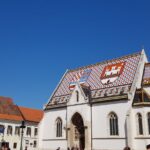
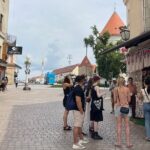
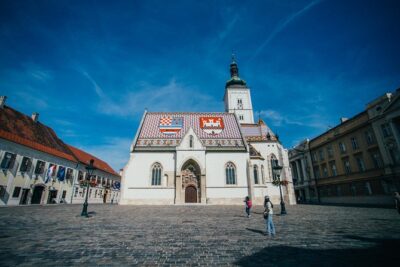
More walks through the Upper Town, St Mark's roof and the Dolac stalls below.


Where you meet in Zrinjevac (and why it’s a smart start)
The meeting point is Trg Nikola Šubić Zrinski 2, in park Zrinjevac, next to the Meteorological station. On one side of the park there’s a small display showing temperature and barometric pressure, which is a neat little Zagreb detail and an easy landmark for finding your guide.
Starting here matters. Zrinjevac gives you a calm, open “breathing space” before you plunge into the older streets and squares. It’s an easy way to settle your bearings—especially if you’re arriving fresh from the station or airport and you want the day to start smoothly.
If you’re staying in a centrally located hotel or hostel, hotel pickup and drop-off is included, which helps a lot in a city where the good walking parts are close, but not always convenient if you’re hauling luggage or tired legs.
Ban Jelačić Square: the name and the big idea
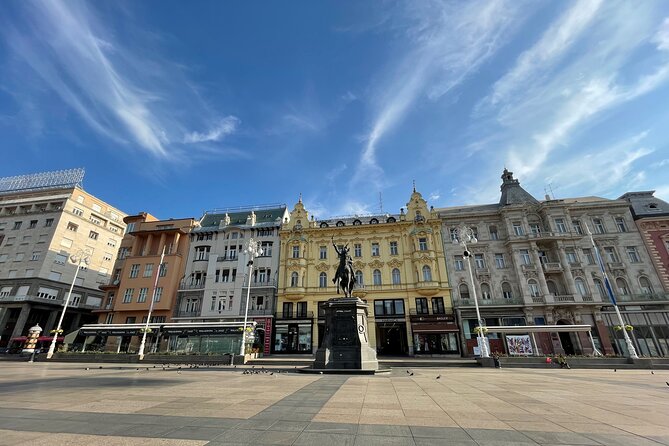
Your route connects Zrinjevac park to the main square, Ban Jelačić. This is where the tour quickly gives you the city’s core geography and political geography too.
You’ll learn how Zagreb got its name, which helps you stop seeing the city as just a postcard backdrop and start seeing it as a place with identity, debates, and changes over time. From here, it’s a natural step toward the great landmark on the skyline—the cathedral—because Zagreb’s central spaces are designed to funnel you toward the biggest symbols.
More private tours, just your own group and a local guide.

Cathedral of the Assumption: why it has survived
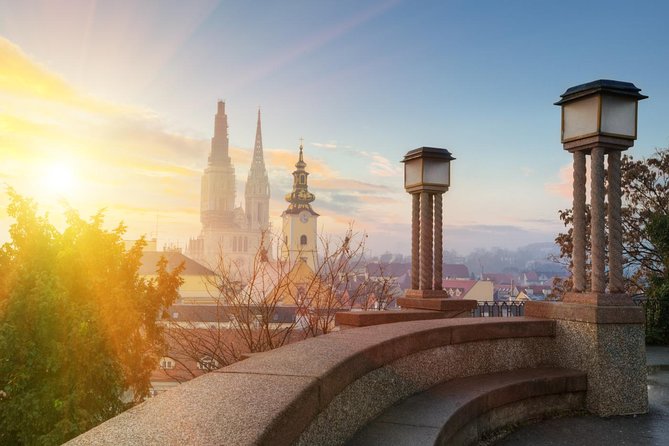
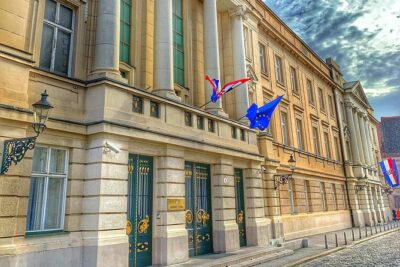
Next comes the Cathedral of the Assumption of the Blessed Virgin Mary, one of Zagreb’s most important landmarks. What makes this stop worth your time is the way the guide frames it: not as a pretty facade you pass through, but as a building that has dealt with difficulties over the centuries and needed renovation.
That context changes how you look at it. When you understand a landmark’s troubles—repairs, damage, and restoration—it stops feeling “finished” and starts feeling human. Even if you’re not a church-history person, you’ll come away with a better read on why this cathedral matters to locals.
Dolac Market: the belly of Zagreb
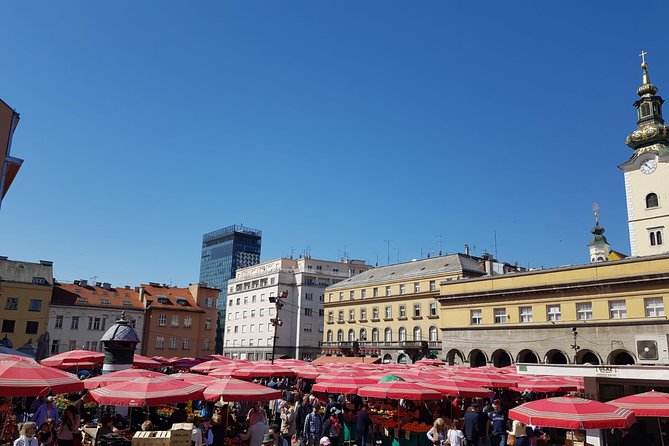
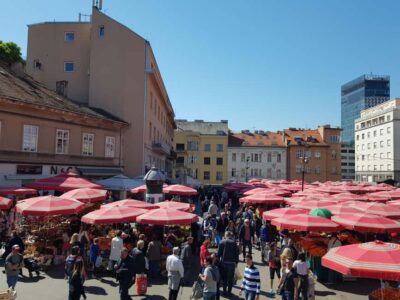
From the cathedral area, the walk continues to Dolac Market, often described as the belly of Zagreb. This is a classic move in a good city tour: you go from official monuments to everyday life.
Dolac Market helps you understand what locals actually do between landmarks. It’s where the city’s rhythm shows up: produce, chatter, quick decisions, and the kind of everyday commerce that makes a city feel lived-in rather than staged for tourists.
If you like to understand a place by its daily habits (not just its grand buildings), this stop is one of the most satisfying.
Tkalčićeva Street: the bar street with a local rhythm
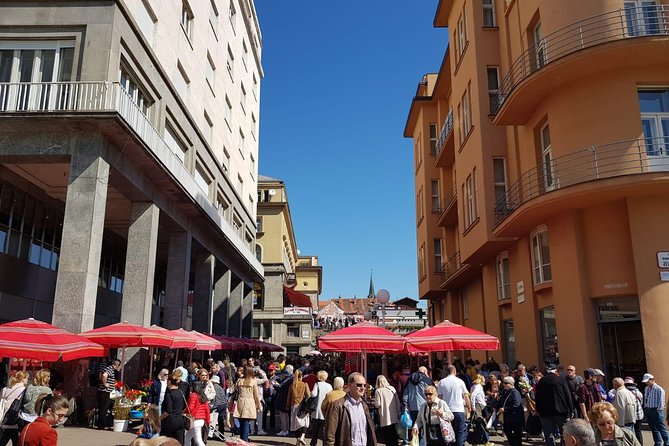
Next is Tkalčićeva Street, better known as the bar street. The key here isn’t the bar list—it’s the philosophy behind the lounging and everyday habits of the locals.
This is a good spot to slow down and watch how people move. Zagreb’s street life has its own pace, and a guide can point out how locals use public space like it’s an extension of home. If you’re visiting for a short time, this is also where you learn how to read the city’s mood: where the energy stays steady, where people gather, and what areas feel more local than showy.
WW2 tunnels: a heavy stop that grounds the walk
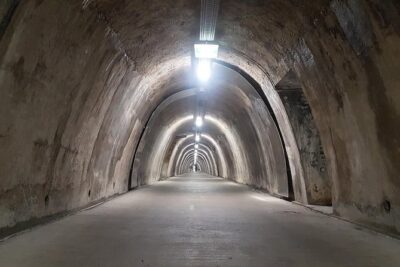
Don’t skip the most serious moment in the itinerary: the WW2 tunnels. This part gives Zagreb a different emotional temperature than the markets and the postcard rooftops.
The value of including the tunnels is simple: it puts modern history in physical form. Instead of hearing facts floating in air, you experience how a city prepared for danger. Even if you only spend a portion of the route here, it changes the way the rest of the tour lands. Churches and towers start to feel like survivors of eras—not just decorations.
Upper Town (Gradec): the viewpoint payoff starts here
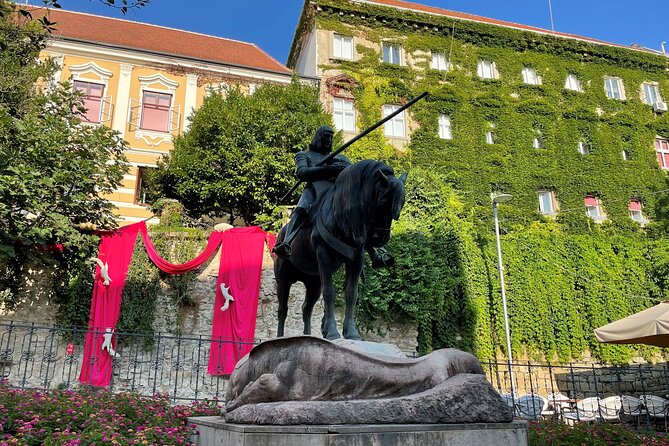
After the tunnels, you head to the Upper Town, Gradec. This is one of Zagreb’s medieval settlements, and the shift is noticeable right away. The streets feel older. The slope makes every turn feel purposeful. And soon, you’re earning those views.
If you’ve ever walked a city and thought, Why is everyone climbing?—Gradec is your answer. Your effort pays off with panorama views and the postcard lineup.
Strossmayer promenade for Zagreb rooftops
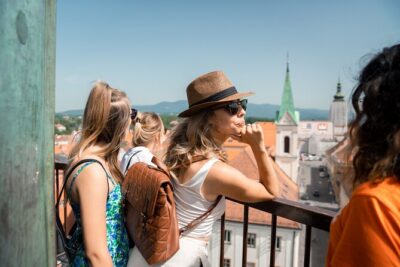
One of the stops in Gradec is the Strossmayer promenade, often considered the best spot for panoramic views of Zagreb rooftops. Even on cloudy days, the rooftops help you understand the city’s shape and density.
Bring patience for this section. You’ll want a minute to scan the skyline, identify what you just walked past, and connect neighborhoods to landmark shapes.
Lotrščak Tower and St Mark’s Church: postcard symbols with explanations
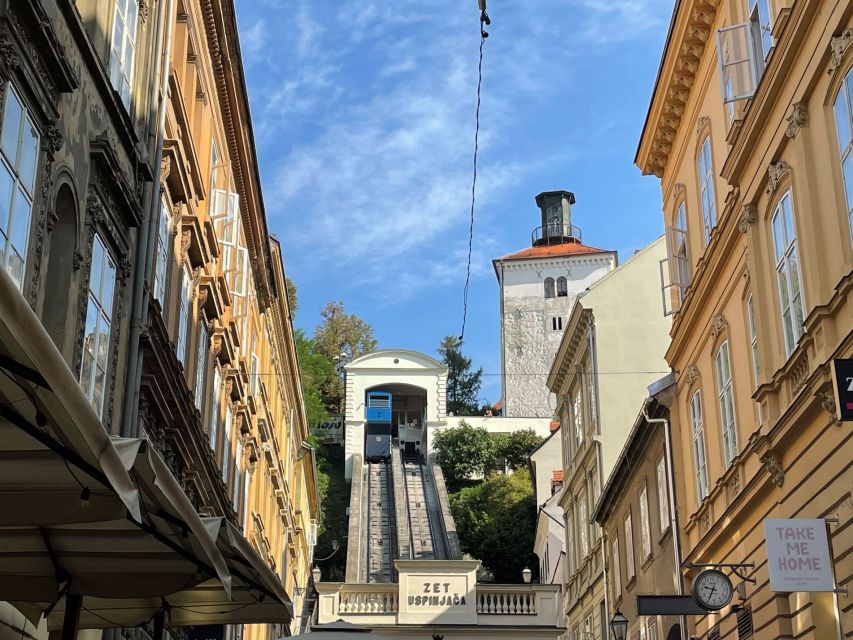
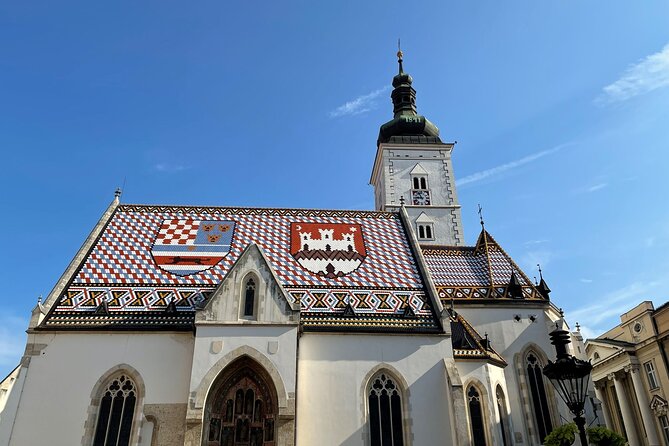
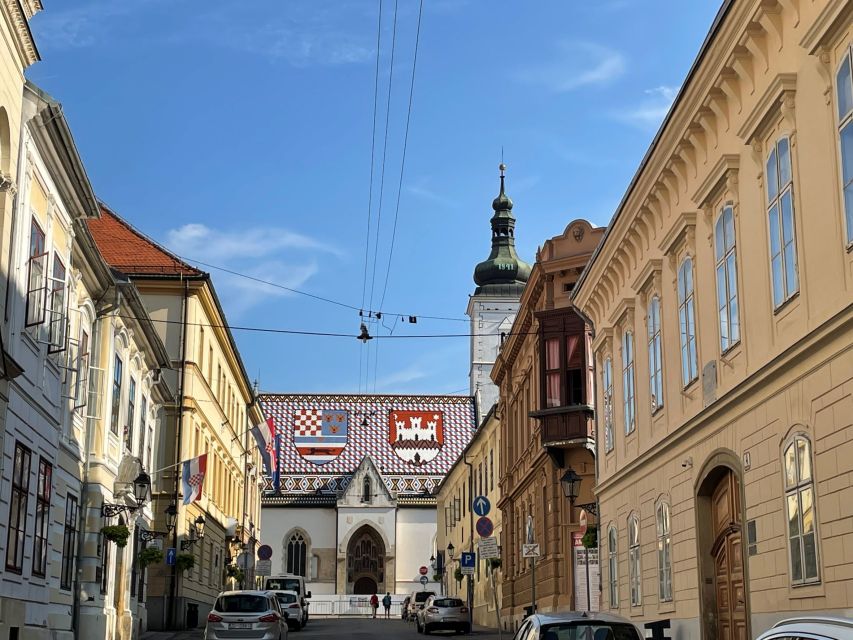
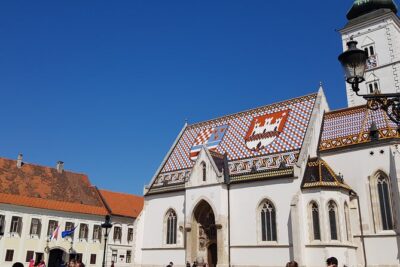
Next up: Lotrščak Tower and St Mark’s Church. St Mark’s Church is the one with the picturesque rooftop that you see on postcards the most.
The guide’s job here is to turn the photo-famous view into something you can actually place in your mind. When you understand what makes the church and the tower recognizable, you stop treating them like background scenery and start using them as navigation anchors.
In practice, these stops also work well because they break up the walking rhythm. You get little peaks of interest—almost like checkpoints—before you continue deeper into the Upper Town.
The oldest pharmacy in Zagreb: a surprising 14th-century stop
From the major church-tower area, you’ll visit the oldest pharmacy in Zagreb, dating from the 14th century.
This is the kind of stop that’s easy to skip if you only chase the biggest names. But it’s exactly what makes a private orientation walk feel more complete. You’re shown another layer of city life: not just power and religion, but health, trade, and daily services that kept people going long before modern convenience.
If you like small historical anchors that show how ordinary routines worked, this pharmacy stop adds real texture.
Stone Gate and the chapel with Our Lady
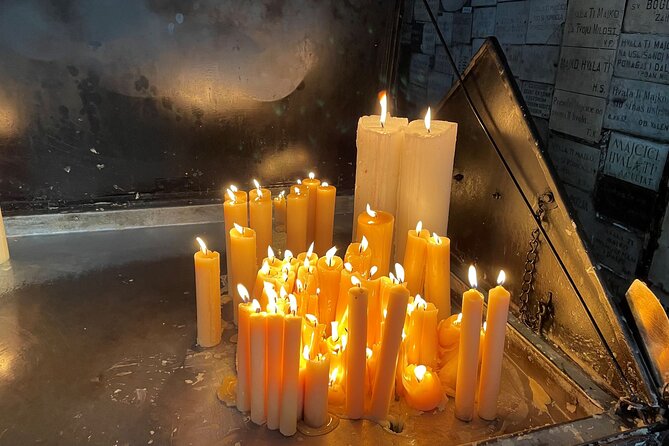
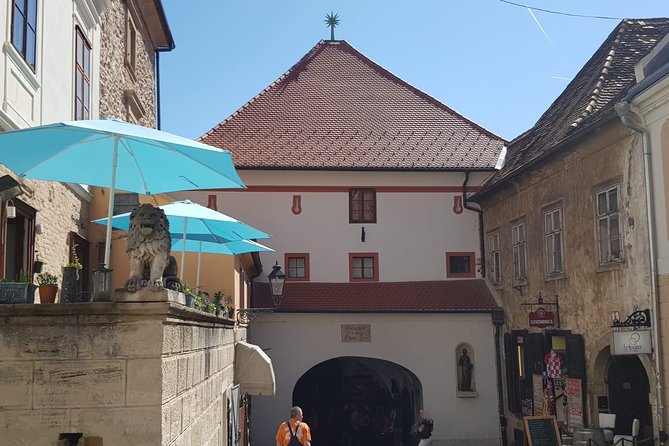
As you leave the Upper Town, you walk through the Stone Gate, part of the city walls and described as the only surviving gate. Inside is a small chapel housing a miraculous picture depicting Our Lady, the patron saint of Zagreb.
This is a strong closing landmark for a walking route because it ties together three things:
1) the city’s defensive past,
2) the city’s spiritual identity, and
3) the way symbols are kept close to daily movement.
The chapel stop also gives your guide space to share local-style storytelling—how beliefs and traditions get woven into street-level history.
Witchcraft stories and hidden surprises: how the guide keeps it human
After the old town highlights, your guide shares stories related to witchcraft and shows you lesser-seen spots around the area.
This is where the private format shines again. These moments are rarely about a single famous object. They’re about interpretation: what to notice, which corners feel different, and how locals have long read their own city. If you enjoy off-script details that make you feel like you’re walking with someone who actually cares, this is the section that will likely stick with you.
Funicular reality check: you’ll see it, but it won’t run
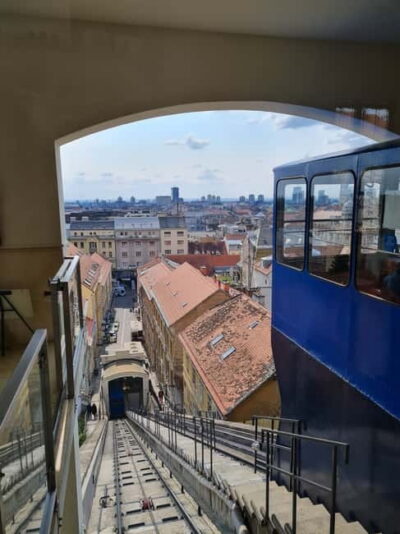
A short stroll away is the charming funicular, the oldest form of public transportation in Zagreb—bringing joy to citizens for over 135 years. But there’s an important heads-up: it’s closed due to renovation until March 2026.
So think of the funicular as a photo moment and a context moment, not a ride. If your plan includes using it, you’ll need to make peace with walking alternatives. Still, seeing it nearby helps you connect how Zagrebians move between levels without treating the city like it’s only walkable staircases.
Price and value: $76 for a private 2.5-hour orientation
At $76 per person for 150 minutes, you’re paying for a focused experience with a licensed English guide and a private format. In a city like Zagreb, private walking tours often feel worth it when:
- you want a sensible route that hits the main symbols without missing the emotional parts (like the tunnels),
- you prefer calm pacing over a sprint through landmarks,
- you’d like hotel pickup and drop-off to reduce friction.
The real value is that you’re not just seeing highlights—you’re getting the reasons behind them as you go. And that matters here, because Zagreb’s story is layered. The guide helps you connect medieval settlement logic, cathedral symbolism, daily market life, and Upper Town viewpoints into one coherent walk.
Who this tour is best for
I’d point this tour toward you if you want:
- a practical first-time Zagreb overview with local pacing,
- a tour that includes both history and daily life (market plus towers),
- the WW2 tunnels experience without having to figure out how to bundle it yourself,
- a private setup that works for slower movement. One review noted a calm pace even on stairs and slopes, which is a good sign if you need more breathing room.
It may be less ideal if you hate walking on inclines or you want long stops in a single place. This is a route tour, so the best strategy is comfortable shoes and an open schedule.
Should you book the Private Walking Tour of Zagreb?
If you’re aiming to understand Zagreb quickly, this is a strong choice. It connects major squares and skyline landmarks with WW2 tunnels, then rounds out the experience with market life, Gradec views, and local storytelling. The private format also helps you keep the walk enjoyable instead of tiring.
Book it if you want a guided orientation that feels thoughtful, not rushed. If you’re sensitive to steep walking, just plan for that upfront—then you’ll enjoy it more, not less.
FAQ
How long is the Private Walking Tour of Zagreb?
It lasts 150 minutes (about 2.5 hours).
Is this a private tour?
Yes, it’s listed as a private group.
What language is the guide?
The live tour guide is in English.
Where does the tour meet?
The meeting point is Trg Nikola Šubić Zrinski 2 (park Zrinjevac), next to the Meteorological station.
Is hotel pickup and drop-off included?
Yes, pickup and drop-off are included for centrally located hotels/hostels.
What are the main sights included on the route?
You’ll see the nucleus of Zagreb including Ban Jelačić Square, the Cathedral of the Assumption of the Blessed Virgin Mary, Dolac Market, Tkalčićeva Street, the WW2 tunnels, and Gradec with stops such as Lotrščak Tower, St Mark’s Church, the oldest pharmacy, and the Stone Gate.
Does the tour include WW2 tunnels?
Yes, the WW2 tunnels are included before continuing to Upper Town (Gradec).
Will I be able to ride the funicular?
The funicular is near the route, but it’s closed due to renovation until March 2026.
What is the cancellation policy?
Free cancellation is available up to 24 hours in advance for a full refund.
Can I reserve without paying right away?
Yes, reserve now & pay later is available.
More Tours in Zagreb


More Tour Reviews in Zagreb
More Upper & Old Town Walks
Not quite it? More Zagreb tours and day trips
- Jump into Zagreb: Walking Tour with local guide
★ 4.8 · 3 reviews - Zagreb : Highlights Walking Tour With A Guide
★ 4.7 · 3 reviews - Zagreb Food Tour: Bite into Traditional Dishes and Flavors
★ 5.0 · 3 reviews - Zagreb to Split private transfer with National park Plitvice lakes guided tour
★ 5.0 · 3 reviews - Plitvice Lakes and Rastoke Private Day Tour from Zagreb
★ 5.0 · 3 reviews - Plitvice Lakes Private Guided Tour from Zagreb with Transfer to Split
★ 5.0 · 3 reviews - Private transfer from Zagreb to Zadar with Plitvice Lakes private tour
★ 5.0 · 3 reviews - Plitvice Lakes Hidden Gems from Zagreb
★ 5.0 · 3 reviews
Zagreb Old & Upper Town Walking Tours, compared.
 ★ 5.0Best of Zagreb with the WW2 TunnelsFrom $23973 reviews
 ★ 4.9Small Group Walking Tour City Center and WW2 TunnelsFrom $23895 reviews
 ★ 4.9City and WWII Tunnels Walking TourFrom $23845 reviews
 ★ 5.0Walking tour of ZagrebFrom $24383 reviews
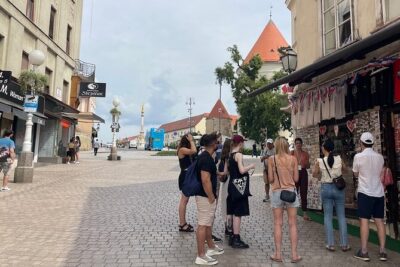 ★ 5.0Zagreb Small Group Guided Walking Tour with WW2 TunnelsFrom $24380 reviews
 ★ 5.0Old Zagreb Private TourFrom $90350 reviews
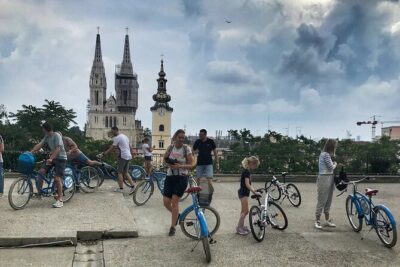 ★ 5.0Zagreb Highlights Bike TourFrom $49208 reviews
 ★ 5.0Restaurants, Food & Old Town Walking TourFrom $107191 reviews
Browse the lists this tour appears in