
Reviewed · ZAGREB WWII TUNNELS TOURS
Zagreb: Small Group Walking Tour City Center and WW2 Tunnels
Zagreb teaches fast when you walk with a local. This small-group tour threads old-town landmarks with a stop inside the WWII tunnels, so you get both the postcard sights and the heavier stories beneath the streets. I like that it moves at a steady pace through the center, with a guide who explains what you’re seeing and what it meant. Petra and Tom are two examples of the kind of story-first guides you may get, and they tend to make the city feel personal rather than like a list of stops. One caution: the WWII tunnel can be closed for special events, and you’ll need some flexibility if that happens.
Here’s what I really appreciate: you cover the core sights without rushing, and you get the “how people live” layer, not just dates and monuments. I also like the extra stops that help you orient fast, like Lotrščak Tower views and the Stone Gate area with its little chapel. A practical drawback is that Dolac Market has limited hours, so timing matters if you’re going in the afternoon or on a public holiday.
You’ll end back near Ban Jelačić Square, feeling like you can actually navigate Zagreb on your own next day. Bring a light rain layer too—this is a walking tour, and you’ll still have a great time even when the weather isn’t perfect.
In This Review
- Key things worth knowing before you go
- Walking Zagreb’s core: from Zrinjevac to Gradec in 2.5 hours
- Zrinjevac Park and Ban Jelačić Square: your orientation for Zagreb
- Cathedral of Zagreb: the landmark and the scars that came with it
- Dolac Market and Tkalčićeva Street: everyday Zagreb, not just architecture
- Gric Tunnel WWII stop: seeing history underground
- Upper Town (Gradec): Strossmayer promenade and Lotrščak Tower views
- Museum of Broken Relationships and Saint Mark’s: pairing quirky with classic
- Stone Gate and the oldest pharmacy: Zagreb’s medieval walls still matter
- Witchcraft stories, secret stops, and how the tour ends back at Ban Jelačić
- What you pay ($23) and why this tour can feel like good value
- Practical tips before you book: timing, weather, and expectations
- Should you book the Zagreb walking tour with WWII tunnels?
- FAQ
- How long is the Zagreb city center walking tour with WWII tunnels?
- Where does the tour start and where does it end?
- Is the WWII tunnel always included?
- Is the funicular part of the experience?
- Can I visit Dolac Market during the tour?
- Is this tour wheelchair accessible?
Key things worth knowing before you go
- WWII tunnels included: a dedicated stop at the Gric Tunnel, with a heads-up that it can close for events
- A walk that makes sense: Zrinjevac to Ban Jelačić, then up to Gradec and back down
- Top views without a car: Strossmayer promenade and Lotrščak Tower are built for panoramas
- Medieval walls still visible: Stone Gate and the old pharmacy area connect the past to today
- Food is optional: the tour doesn’t include meals, so plan to eat after
- Not built for wheelchairs: it isn’t suitable for wheelchair users
Walking Zagreb’s core: from Zrinjevac to Gradec in 2.5 hours
This tour is built for first-timers and time-crunched travelers. In about 2.5 hours, you cover a lot of the city’s “must-see” concentration: the center square area, the market, and the Upper Town (Gradec), plus the WWII tunnel detour that most casual self-guided walks miss.
I like the way the route is structured. You start in the greener, calmer part of town at Zrinjevac Park, then you walk into the civic core around Ban Jelačić Square, then you head uphill toward Gradec for the views and the medieval skyline. By the time you’re finished, you’ve seen where Zagreb’s daily life happens and where its older identity is still visible in stone and rooftops.
It’s also a nice size in practice. The tour is described as small group, and that tends to mean you can ask questions without yelling over crowds. In the reviews, guides such as Petra, Tom, Maja, Bernarda, and Maya are repeatedly praised for turning history into stories you can picture, and that makes the short duration feel like more than it is.
More walks through the Upper Town, St Mark's roof and the Dolac stalls below.


Zrinjevac Park and Ban Jelačić Square: your orientation for Zagreb
The tour begins at Zrinjevac (Zrinjevac 2), at the park next to the meteorological station. If you find it easy, you’ll also feel calmer for the rest of the walk, because you’ll know you’re in the right place before the guide starts the story.
From there, you get a photo stop and a quick introduction to the Park Zrinjevac area. This matters more than it sounds. Zagreb’s old town can look compact from a distance, but once you understand the city’s layout—park to square to cathedral axis—you stop feeling like you’re “wandering” and start feeling like you’re mapping.
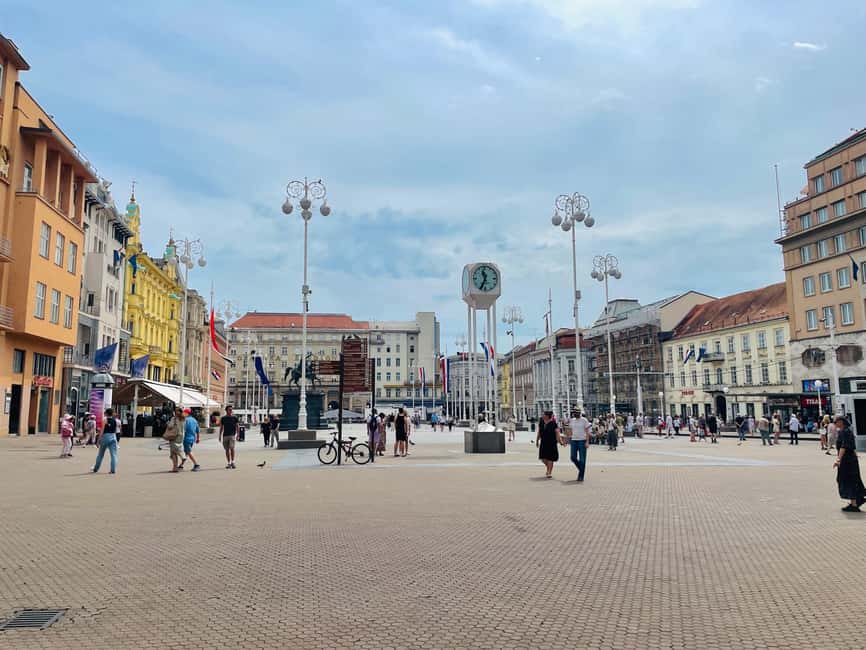
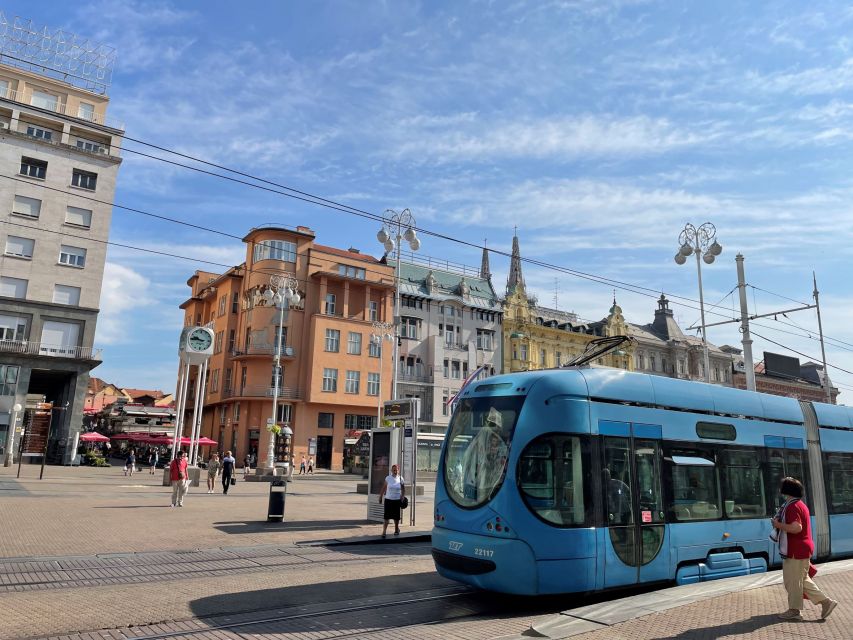
Next up is Ban Josip Jelačić Square (photo stop included). This is Zagreb’s great meeting point, and your guide uses it to explain how the city’s story shaped the way it grew. You’ll hear how Zagreb got its name, and you’ll get context for why the square is such a natural starting anchor.
Cathedral of Zagreb: the landmark and the scars that came with it
At the Cathedral of the Assumption of the Blessed Virgin Mary, you’ll get a focused stop—photo time plus guided explanation. This is one of Zagreb’s key landmarks, and your guide will cover where the cathedral’s story comes from and what it survived over the years.
I like stops like this because they turn buildings into something you can read. Instead of treating the cathedral as a backdrop, you learn what hardships the structure endured and how renovation shaped what you see today. That’s the difference between taking a picture and understanding why that picture looks the way it does.
More routes down into the Gric wartime tunnels under the old town.
Dolac Market and Tkalčićeva Street: everyday Zagreb, not just architecture
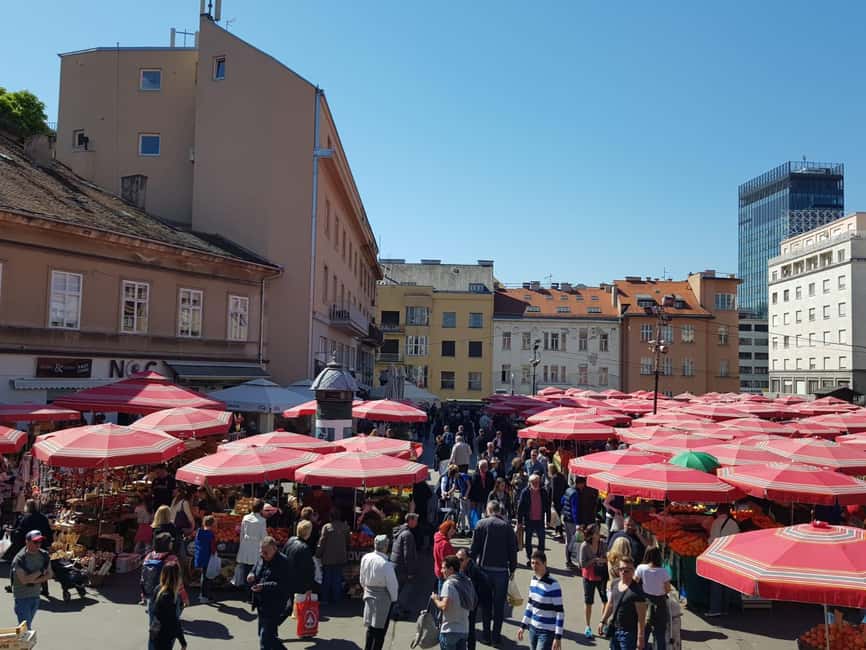
Then you’re walking into the food and life of the city at Dolac Market. The tour includes a dedicated stop here, with guided time for you to notice how the market operates and why locals care about it.
There’s one timing factor you need to plan around: Dolac Market is closed in the afternoon and on public holidays. If you’re aiming for photos and atmosphere, try to be aware of what time your tour runs, so you don’t show up to a quieter-than-usual market.
From the market area, the route continues toward Tkalčićeva Street, often called the bar street. This isn’t just about nightlife. Your guide talks about everyday habits—how locals lounge, how social life spills onto the street, and how Zagreb’s rhythm feels in real time. Even if you don’t stop for a drink, you’ll get a feel for the city’s “between meals” culture.
Gric Tunnel WWII stop: seeing history underground
The standout detour on this tour is the WWII tunnel, specifically the Gric Tunnel stop. You’ll get a photo stop and guided time here, and it’s included as a real moment in the tour, not just a quick glance.
Two practical notes matter:
- The tunnel may be closed if events or exhibitions are happening inside. If that happens, you won’t be able to visit it.
- Even with closures, the tour still covers the Upper Town and old-city highlights, so you’re not left with an empty experience.
I think this stop is valuable because it changes your perspective. Zagreb’s surface looks graceful—terraces, towers, rooftops—but the tunnel adds weight. It also helps you understand why people remember certain places even when the buildings above are purely scenic.
If you care about WWII history, this is the kind of add-on that makes a short tour feel substantial. In the reviews, the tunnel is repeatedly singled out as a favorite part, which makes sense: it’s vivid, different, and memorable.
Upper Town (Gradec): Strossmayer promenade and Lotrščak Tower views
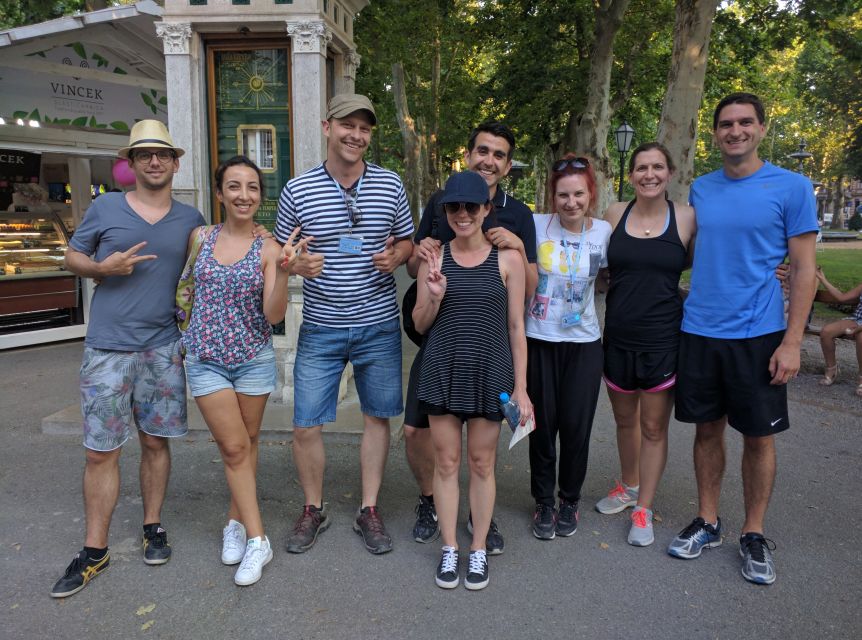
After the tunnel, you’ll continue on to Gradec, the Upper Town. This area is one of the two medieval settlements that formed Zagreb, and you’ll feel the difference as the walk shifts uphill and your view lines open.
Along the way, there’s a brief scenic segment on the route to Strossmayer promenade. The promenade is described as the best spot for panoramic views of Zagreb rooftops, so this is your moment to slow down. You’ll likely see how the city layers its older parts over time, with roofs and spires shaping the skyline.
Next, you visit Lotrščak Tower. Expect a photo stop plus guided explanation. The tower is one of the big “orientation landmarks” in Gradec, and it works well for photos because the tower gives you a clear vertical anchor.
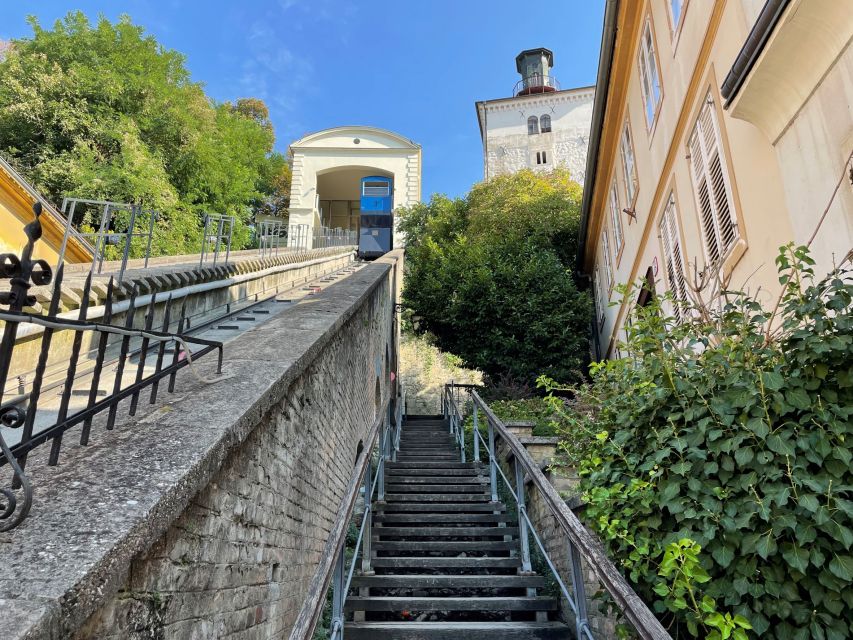
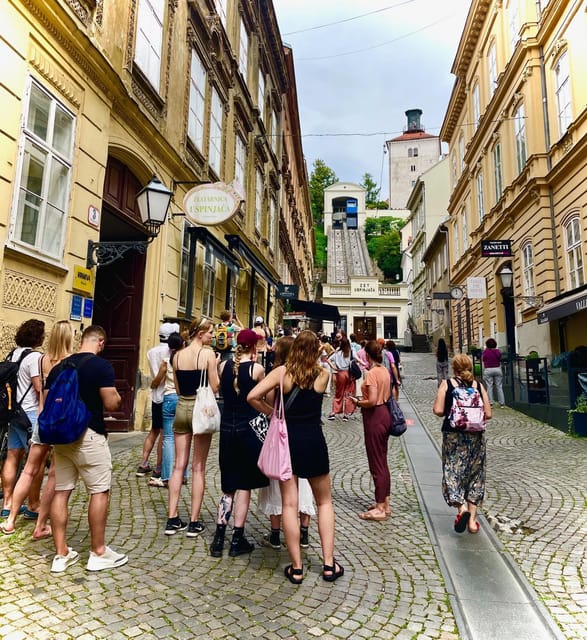
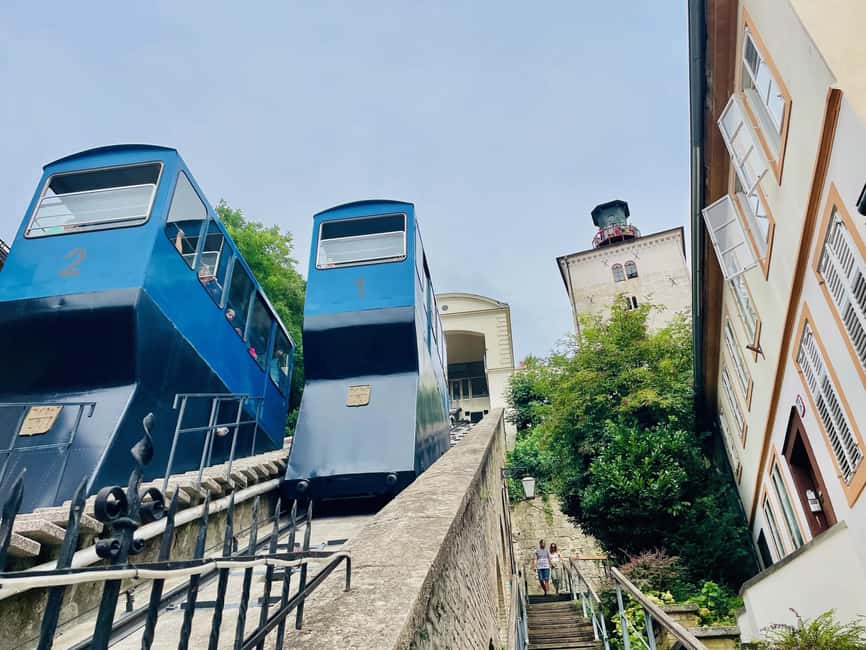
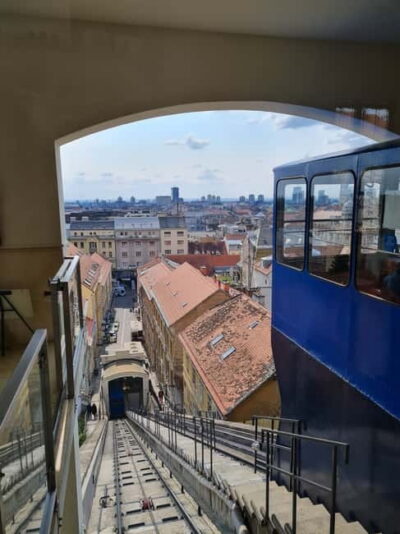
One small detail that I’d treat as a bonus: this is also where the funicular connection often comes up. The tour mentions that a short stroll away is the funicular, the oldest form of public transportation in Zagreb, used for more than 135 years. But there’s a catch: it’s closed for renovation until March 2026. So don’t plan to ride it on the day of your tour—think of it as something you’ll see, not something you’ll use.
Museum of Broken Relationships and Saint Mark’s: pairing quirky with classic
You pass by the Museum of Broken Relationships, which is a quick stop rather than a deep visit. Still, it’s a smart inclusion because it signals that Zagreb isn’t frozen in medieval time. The city has modern culture too, and this kind of stop gives you a broader emotional map of what locals talk about.
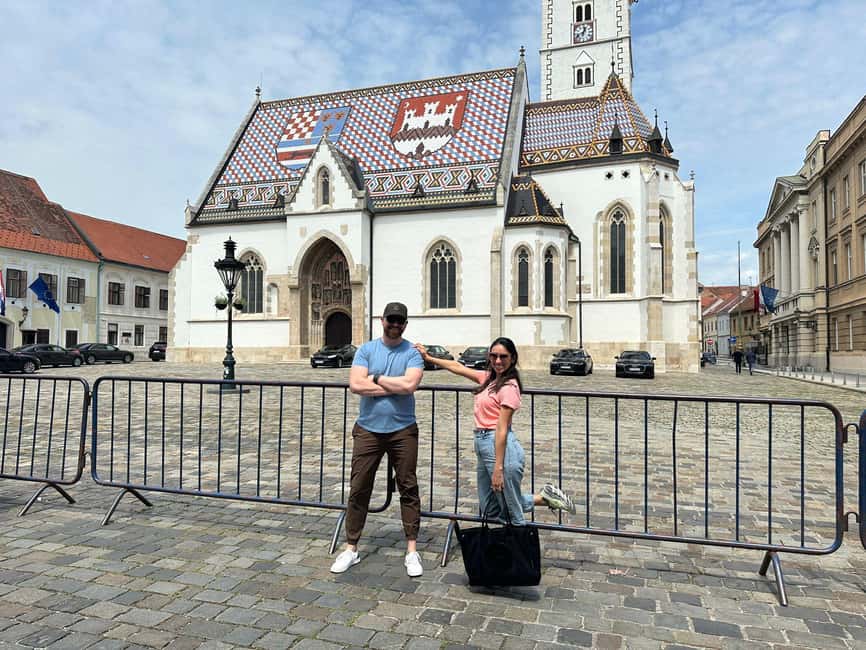
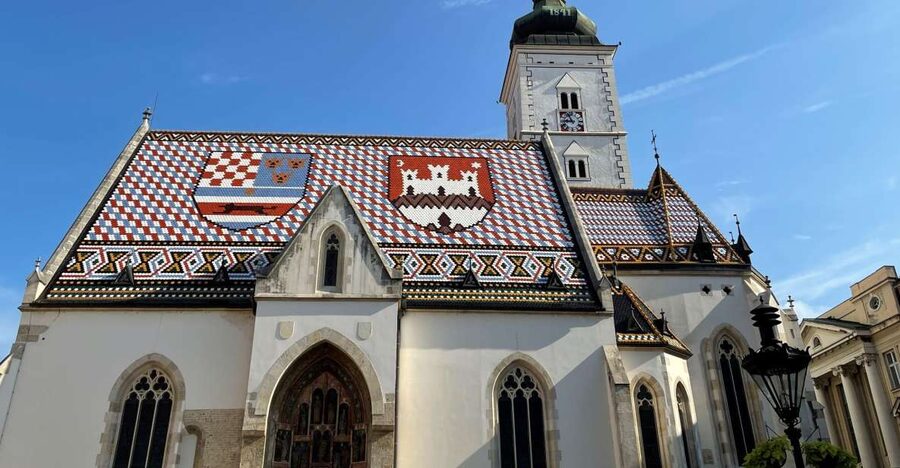
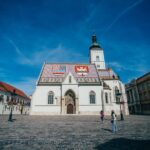
Then you reach St Mark’s Square and Saint Mark’s Church. The church’s postcard-worthy rooftop is the star here, and you’ll get guided time to connect the visuals to the story behind the landmark. If you’ve ever seen that iconic rooftop image, this is where it comes from.
I like pairing these sights on foot because they complement each other. One is playful and contemporary; the other is emblematic and old. Together they help you understand Zagreb as a whole place, not just a single era.
Stone Gate and the oldest pharmacy: Zagreb’s medieval walls still matter
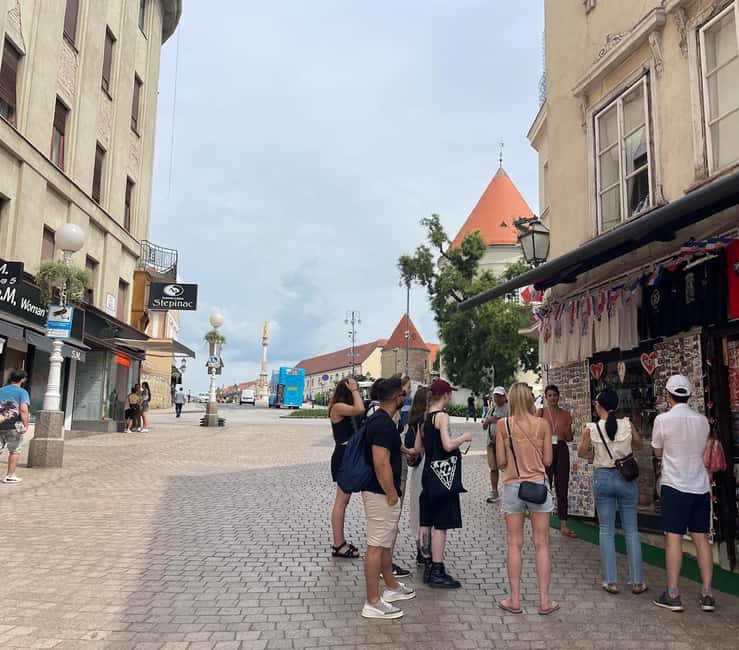
As you leave the Upper Town, you walk through the Stone Gate, a remaining piece of the old city wall system and described as the only gate that has survived. It’s not just a pretty arch—your guide explains what it was for and why it mattered.
Inside, there’s a small chapel with a miraculous picture depicting Our Lady, the patron saint of Zagreb. That detail gives the gate real meaning beyond architecture. Then your guide points out the oldest pharmacy in Zagreb, dating from the 14th century. It’s a reminder that medieval towns weren’t only defensive—they were also practical places for daily care and trade.
I find stops like this are where walking tours earn their keep. You’re not only moving between sights—you’re learning what life looked like when the city was young enough to build walls like this.
Witchcraft stories, secret stops, and how the tour ends back at Ban Jelačić
After the main old-town route, the tour includes an extra layer: your guide talks about witchcraft and shares additional lesser-known moments, including a secret stop that’s passed by briefly. This part is designed to keep the tour from becoming too predictable.
In a city like Zagreb, small storytelling details can be the difference between a good walk and a memorable one. The guides highlighted in reviews—especially Petra and Tom—are praised for weaving not just monuments but social trends and everyday life into the route. If you’re the type who likes learning how people think and live, this is the section that often lands best.
Finally, you end back around Ban Jelačić Square (Trg bana Josipa Jelačića). Ending in the main square is convenient: it’s the easiest area to continue your day on your own—cafés, transit, and walking connections all funnel back there.
What you pay ($23) and why this tour can feel like good value
At about $23 per person for a 2.5-hour small-group walking tour, you’re paying mainly for two things: a local guide’s time and a pre-designed route that hits the top center sights without you having to hunt for context.
For this price, the real value is the mix. If it were only cathedral-and-square sightseeing, it would be a standard “highlights” walk. But you also get:
- the WWII tunnel stop,
- the Gradec viewpoints and church area,
- and the Stone Gate medieval wall experience.
That combination is hard to assemble on your own quickly unless you already know Zagreb well. Plus, guides often add practical touches. In the reviews, people mention that some guides share restaurant recommendations, including places like Vinodol, and others like Ficlek and Stari showing up in suggestions. You shouldn’t expect the exact same recommendations each time, but it’s a good sign that the guide angle is local, not generic.
Practical tips before you book: timing, weather, and expectations
A few things will make your day smoother:
- Check timing for Dolac Market: it closes in the afternoon and on public holidays. If your tour lands later, the market stop may feel quieter.
- Plan for the tunnel possibility: the WWII tunnel might be inaccessible due to events. If it’s closed, you won’t get that underground segment.
- Expect walking: the tour is not suitable for wheelchair users, so wear shoes with grip and be ready for uneven old-town surfaces.
- Bring a rain layer: one reviewer noted the tour stayed enjoyable even when it rained. Rain gear is smart in Zagreb.
- Funicular is off-limits during renovations: it’s closed until March 2026, so don’t count on riding it as part of your day.
Also remember the tour doesn’t include food or drinks. That’s normal for a walking tour, but it matters if you’re comparing options. Build in time for a meal afterward, ideally near the end point at Ban Jelačić Square.
Should you book the Zagreb walking tour with WWII tunnels?
If it’s your first time in Zagreb and you want a fast, structured route, I think you’ll enjoy this. The price is low enough that it doesn’t feel risky, and the itinerary hits the big identity points: the cathedral area, the market street life, Gradec viewpoints, and the wartime tunnel that adds a powerful contrast.
I’d especially book it if:
- you like history that connects to places you can see,
- you want WWII included without needing museum-day planning,
- and you’re okay with a walking pace that’s active but manageable.
The main reason to hesitate is the tunnel closure risk and the market hours. If that underground stop or the market atmosphere is your top priority, you’ll want to be a bit flexible with timing.
FAQ
How long is the Zagreb city center walking tour with WWII tunnels?
It lasts about 2.5 hours.
Where does the tour start and where does it end?
The meeting point is Zrinjevac 2 (next to the meteorological station). The tour ends back at Trg bana Josipa Jelačića (Main Square).
Is the WWII tunnel always included?
The WWII tunnel (Gric Tunnel) is part of the tour, but it may be closed to visitors if there’s an event inside. If that happens, you won’t be able to visit the tunnel.
Is the funicular part of the experience?
The tour includes mention of the funicular nearby, but it is closed for renovation until March 2026, so you shouldn’t plan on riding it.
Can I visit Dolac Market during the tour?
Dolac Market is included, but it is closed in the afternoon and on public holidays, depending on when your tour runs.
Is this tour wheelchair accessible?
No. It is not suitable for wheelchair users.
More Tour Reviews in Zagreb


More WWII Tunnel Tours

More Upper & Old Town Walks
Not quite it? More Zagreb tours and day trips
- Jump into Zagreb: Walking Tour with local guide
★ 4.8 · 3 reviews - Zagreb : Highlights Walking Tour With A Guide
★ 4.7 · 3 reviews - Zagreb Food Tour: Bite into Traditional Dishes and Flavors
★ 5.0 · 3 reviews - Zagreb to Split private transfer with National park Plitvice lakes guided tour
★ 5.0 · 3 reviews - Plitvice Lakes and Rastoke Private Day Tour from Zagreb
★ 5.0 · 3 reviews - Plitvice Lakes Private Guided Tour from Zagreb with Transfer to Split
★ 5.0 · 3 reviews - Private transfer from Zagreb to Zadar with Plitvice Lakes private tour
★ 5.0 · 3 reviews - Plitvice Lakes Hidden Gems from Zagreb
★ 5.0 · 3 reviews
Zagreb WWII Tunnels Tours, compared.
 ★ 5.0Best of Zagreb with the WW2 TunnelsFrom $23973 reviews
 ★ 4.9City and WWII Tunnels Walking TourFrom $23845 reviews
 ★ 5.0Zagreb Small Group Guided Walking Tour with WW2 TunnelsFrom $24380 reviews
 ★ 4.9Guided City Tour with WWII TunnelsFrom $23155 reviews
 ★ 5.0Jump into Zagreb – Small Group walking tour with WWII TunnelFrom $3016 reviews
Browse the lists this tour appears in