
Reviewed · ZAGREB OLD & UPPER TOWN WALKING TOURS
Zagreb Private Walking Tour with a local
Zagreb is small, but the stories aren’t. This private walking tour threads the city’s Upper and Lower Town, then adds a WWII tunnel and a funicular ticket to make it feel like more than a quick highlights loop.
I love how the route gives you real orientation fast—parks, squares, markets, and viewpoints in a logical flow—so your first day in town stops feeling like guesswork. I also like the private guide format, with time for questions and the kind of pacing that works whether you want photos or facts (or both).
One thing to consider: the funicular ticket is included, but the funicular is listed as closed for renovation until March 2026, so you’ll want to be ready for the stop without a ride depending on your dates.
In This Review
- Key points that make this tour worth your time
- Zagreb in 2 hours: how this route helps you get your bearings fast
- Starting at Zrinjevac and the green “horse-shoe” park feel
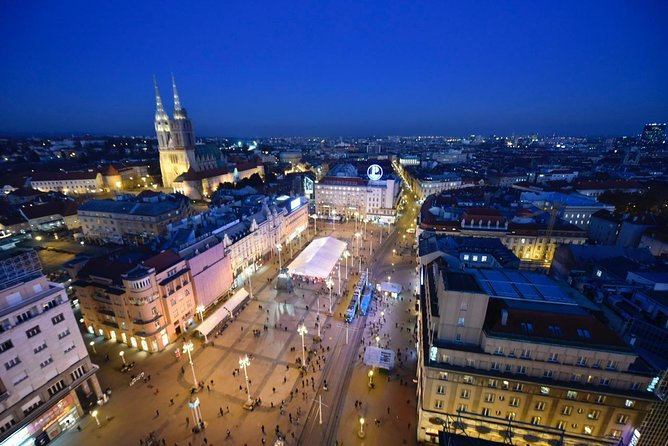
- Ban Jelačić Square to Kaptol & Gradec: the medieval rivalry made walkable
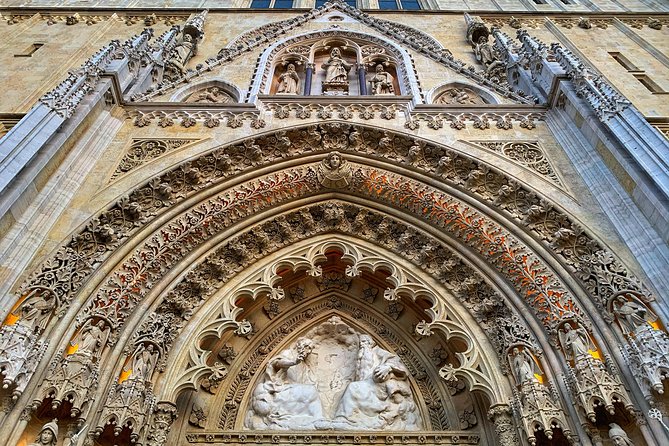
- Zagreb Cathedral: the tallest building clue in the skyline
- Dolac Market: reading Zagreb through food culture
- Walking the Lower Town to the Tkalčićeva bar-and-views stretch
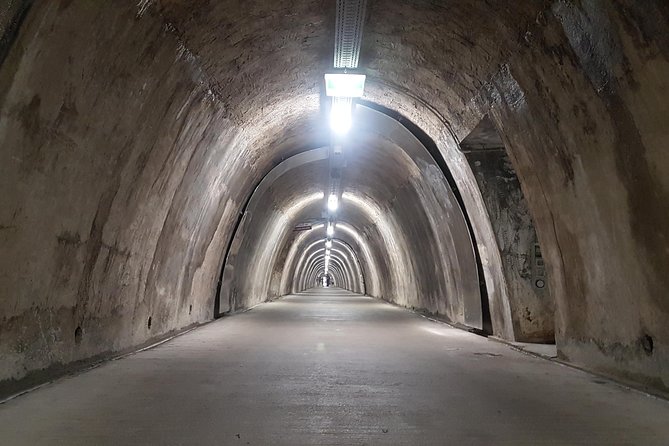
- Radiceva and the Grič Tunnel: Zagreb’s WWII twist
- Funicular Railway ticket included, plus the noon ritual at Lotrščak
- Strossmayer Promenade and St. Catherine Church: romance with purpose
- St Mark’s Church and Petrini Pyli: the Gradec landmark loop
- The final stretch down Radiceva toward Ban Jelačić Square
- What a private guide actually changes in Zagreb
- Price and value: why $84.69 can make sense for a first Zagreb day
- Who should book this tour (and who might skip it)
- When to go and what to wear for an easier walk
- Should you book this Zagreb Private Walking Tour with a local?
- FAQ
- What is the duration of the Zagreb private walking tour?
- How much does the tour cost?
- Where do I meet the guide, and where does the tour end?
- What’s included in the tour?
- Is the funicular ride included, and what if it’s closed?
- What sights are part of the route?
- Is food included?
- What should I know about cancellation?
Key points that make this tour worth your time
- Private, English-speaking local guides who can adjust pace and answer questions on the spot
- Funicular Railway ticket included, but check how it plays out with renovation timing
- Gradec vs. Kaptol storyline woven into the walk, not dumped as a lecture
- WWII Tunel Gric stop adds a surprising, darker layer to Zagreb’s everyday streets
- Noon cannon moment at Lotrščak Tower is built into the itinerary timing
- Lots of classic sights in 2 hours, without rushing you through them
Zagreb in 2 hours: how this route helps you get your bearings fast
If your plan is Zagreb for just a day—or even just a morning—this tour is a smart way to build a mental map. You start in Zrinjevac and move through the key civic spaces of the Lower Town, then work your way up toward Gradec. The walk is short enough to stay lively, but planned enough that you’re not just bouncing from one photo spot to another.
The private part matters. You can ask the obvious questions (How did Zagreb grow?) and the fun ones too (Why does this street divide two medieval towns?), and the guide can steer the pace. Several guides highlighted in past tours—Marko, Mario, Ivana, Luka, Karlo, Bernarda, and Aleksandar—are described as personable and energetic, which helps when the day is hot or you want extra context.
This is not a museum day. It’s a street-level tour that uses architecture, street names, and landmarks to explain why Zagreb looks the way it does today.
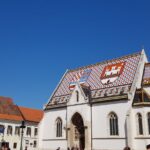
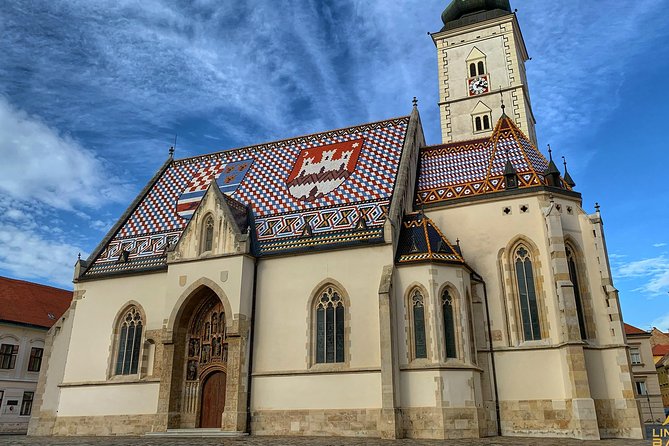
More walks through the Upper Town, St Mark's roof and the Dolac stalls below.


Starting at Zrinjevac and the green “horse-shoe” park feel
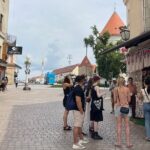
The meeting point is the Meteorological Post in Zrinjevac, and that opening choice is great. Zrinjevac gives you breathing room right away, plus a visual sense of where the city’s center sits. It’s one of those places where you can feel the city’s civic style—clean lines, open space, and a calmer vibe before the Old Town gets more intense.
The tour’s first stop focuses on the beauty of this park area and sets the tone: you’ll be walking through named spaces, not just passing them. In practice, that matters because it helps you understand what’s “central” and what’s “uphill,” which you’ll notice quickly once the route starts trending toward Gradec.
If you’re the type who likes to start slow and build confidence, this works. You won’t feel dropped into a maze on minute one.
Ban Jelačić Square to Kaptol & Gradec: the medieval rivalry made walkable
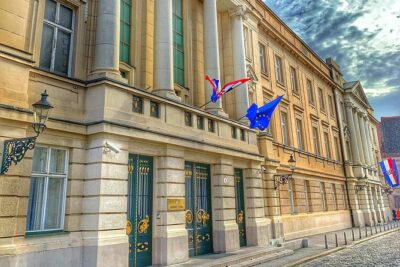
From Ban Josip Jelačić Square, the story shifts to how Zagreb formed—especially the separation between Kaptol and Gradec. The tour starts near a meteorological post and then heads through the older parts of town, using the street fabric and landmarks to explain how local life developed.
This is one of the most useful segments for first-timers. Zagreb’s Old Town isn’t just “old buildings.” It’s two medieval worlds with a boundary logic you can actually see while walking. Once you understand that, other details start clicking: why certain streets and viewpoints feel like they belong to one side or the other, and why the city layout makes sense the way it does.
A guide can also do something subtle here: turning the rivalry into everyday meaning. You’ll hear about the culture and the life of locals, and it tends to make the architecture feel less random.
More private tours, just your own group and a local guide.

Zagreb Cathedral: the tallest building clue in the skyline
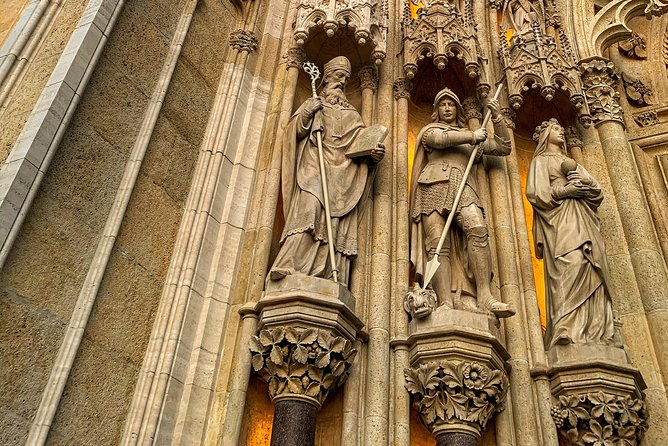
Next up is the Cathedral of Zagreb, noted as the tallest building in Croatia. Even if you’re not a hardcore church person, this stop gives you an instant reference point. It’s the kind of landmark you can remember later when you’re trying to orient yourself from across town.
The way this tour uses it is smart: you don’t just stop in front of a big façade and move on. You use the cathedral as part of the larger explanation of the Old Town’s character—why power, faith, and civic identity often show up as the tallest structures in European cities.
One practical perk: the timing is short at each stop, but you’ll still get enough time to look closely. If you care about details—stone, symmetry, scale—this is where you can slow the pace without derailing the whole tour.
Dolac Market: reading Zagreb through food culture
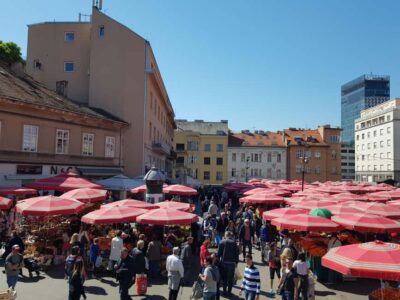
Dolac Market is the city’s main farmers market, and it’s described as the belly of the town. That phrasing is spot-on for what it feels like: you get a concentrated slice of local routines, colors, and daily commerce.
This stop is valuable because it adds a human layer. History is great, but cities are lived in. A market is where you see what locals actually rely on, and it gives context for why certain squares and streets stay important over centuries.
Two things you’ll want to remember here:
- Even if you don’t plan to buy much, look closely at the flow—who’s selling, who’s browsing, and how the market connects to the surrounding streets.
- If you’re traveling during a busier season, market energy can make timing feel tight, so the private pace helps you avoid the pressure of a larger group.
Food & drinks aren’t included on this tour, but that doesn’t stop the market from being a useful stop. Think of it as direction for what to try later on your own.
Walking the Lower Town to the Tkalčićeva bar-and-views stretch
As the route continues, you’ll pass through Opatovina Park, then head toward Tkalčićeva Street. The Opatovina segment is about the walls of Kaptol and walking through them to reach Tkalčićeva—plus views over the Upper Town.
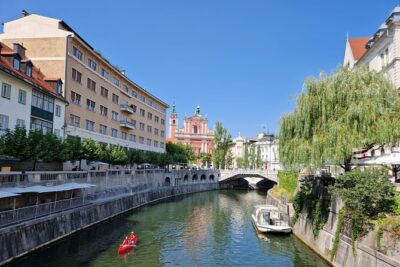
That wall-and-view logic is one of the best ways to understand Zagreb’s levels without doing a hardcore hike. You get a change in perspective that makes the city’s geography make sense. Then, stepping onto Tkalčićeva, you get the contrast: this street was once tied to the division of two medieval towns, but today it’s known for bars and restaurants.
In other words, you’re watching time move forward in a single walk. Medieval boundary becomes modern social street. If you enjoy connecting dots, you’ll like this segment.
Radiceva and the Grič Tunnel: Zagreb’s WWII twist
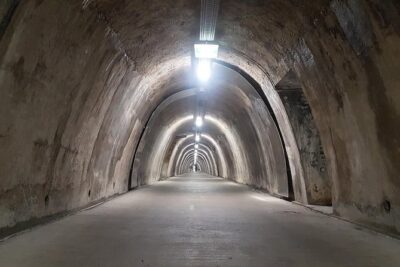
The tour then moves toward the Upper Town area with stops around Radiceva, and it adds a highlight that most city walks skip: Tunel Gric. This is a WWII secret tunnel walk.
This stop is a strong reason to book the tour even if you think you’ve seen enough churches and squares. It gives Zagreb a darker, more layered side—the part of the city’s past that isn’t just decorative.
Because the tunnel is part of a walking route, you also get a sense of how Zagreb’s citizens moved and survived under pressure. Even without turning it into a history seminar, it tends to land emotionally, since it’s literally underground and built for concealment.
Funicular Railway ticket included, plus the noon ritual at Lotrščak
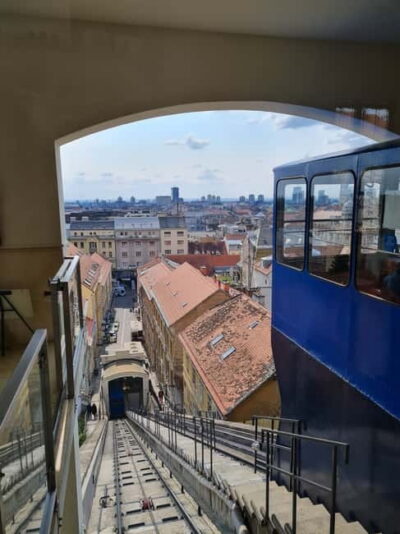
One of the itinerary stops is the Funicular Railway, described as the shortest funicular in the world, with the ticket included. But there’s a key detail: the funicular is listed as closed for renovation until March 2026.
So here’s the practical way to think about it:
- If you travel after reopening, you can expect the ride to be part of the experience as planned.
- If you travel before March 2026, treat it as a featured stop where you’ll likely learn about the funicular and the area—even if the ride may not happen.
Then comes Lotrščak Tower, where a cannon fires every day exactly at noon. The tour notes that the ticket for this is not included, but the schedule part is the important gift. It gives you a reason to time your walk so the cannon moment is possible.
If you want the best shot or least-stress experience, this is a good place to lean into the guide’s timing. From past experiences with guides, one helped find an appropriate spot for the noon firing—exactly the sort of small advantage that makes a private tour feel worth it.
Strossmayer Promenade and St. Catherine Church: romance with purpose
After Lotrščak, you’ll reach Strossmayer Promenade, described as one of Zagreb’s most beautiful and romantic promenades. This is where the city tends to open up visually, and it gives you a break between heavier history stops.
Then there’s the Church of St. Catherine, a 17th-century church in Baroque style. Baroque can look like a lot of decoration if you don’t have context, so the tour’s value is that you can connect style to era and to how the city expressed taste and power.
This segment works particularly well if you like photos, but it also helps if you’re more practical: promenades and churches are easy to recognize, which makes your memory of Zagreb stronger later.
St Mark’s Church and Petrini Pyli: the Gradec landmark loop
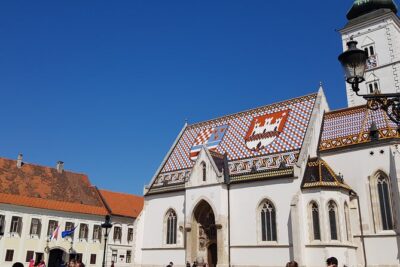
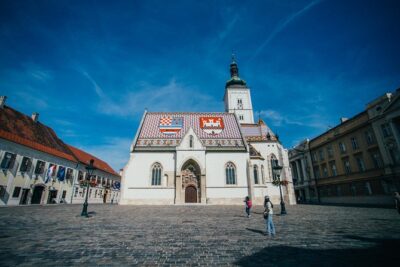
St Mark’s Church is one of Zagreb’s most recognizable landmarks, and it earns its place in the route. This is where you’ll likely feel the skyline character of Gradec—the kind of visual identity you see on postcards and then try to find later once you’re back in your hotel.
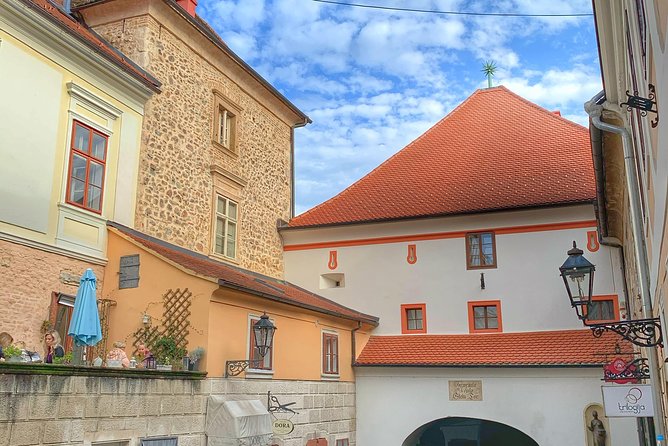
The walk also includes Petrini Pyli, described as an entrance or exit from the Old Town of Gradec. That matters because it gives you a boundary point: you’re not just touring sights, you’re learning how you could move through Old Town on your own later.
If you’re the type who likes to return to places, these “edges” of neighborhoods are useful. You’ll know where you are, and you’ll feel less dependent on maps and Wi-Fi.
The final stretch down Radiceva toward Ban Jelačić Square
The tour’s end is Ban Jelačić Square, with the last walk down Radiceva toward the main square. Radiceva is a fitting finale because it brings you back toward the Lower Town energy while still keeping the Gradec feel fresh in your mind.
Think of this finish as a reset. You’ve been walking and climbing and turning history into a route you can remember. Ending in the main square makes it easy to plan your next step—whether that’s a restaurant, a tram hop, or heading out for museums on your own time.
What a private guide actually changes in Zagreb
This tour is private, and that’s not a fancy label. It changes how you experience the city in at least three ways.
First, you get time for questions. Zagreb rewards curiosity. Why do places look the way they do? How did the medieval split affect daily life? Why does this cannon ritual matter? A private format means you don’t have to save your questions for the end.
Second, you can set your pace. Past guides described in detail—Marko, Mario, Ivana, Luka, Bernarda, and Aleksandar—are repeatedly praised for pacing and personality. One guide was even described as dynamic, professional, and accommodating, while another emphasized an enthusiastic first-day overview.
Third, the guide can help with comfort and timing. One highlight from past experiences was a guide finding shady spots on hot days, which is exactly what you want in summer walking. Another guide helped locate a good spot for the noon cannon firing, which is the kind of tiny planning advantage that a self-guided walk often misses.
Price and value: why $84.69 can make sense for a first Zagreb day
At $84.69 per person for about 2 hours, you’re paying for three things at once:
- A licensed local guide (private attention, not a large group script)
- A structured route that hits key landmarks efficiently
- A funicular ticket included, even though funicular operations are listed as closed until March 2026
So is it worth it? Usually, yes—if you’re using the tour as orientation. When you arrive in a city with two medieval “levels” and a lot of named landmarks, a good guide saves time and helps you avoid aimless walking. This is especially true in Zagreb, where Upper Town and Lower Town can feel like separate places.
If you’re traveling during the funicular closure window, your value will come more from the walking route, the tunnel, and the noon cannon timing. The funicular ticket still matters as part of what’s included, but the ride itself may depend on the renovation schedule.
Who should book this tour (and who might skip it)
I’d book this tour if:
- it’s your first time in Zagreb and you want a clear map of the city quickly
- you like history explained through real places, not long lectures
- you want the noon cannon moment and you care about timing
- you prefer the flexibility of private pacing
You might skip it if:
- you already know Zagreb well or you only want one or two specific sights
- you’re visiting right before the funicular reopens and you strongly want the ride no matter what
- you’re looking for long museum time (this is a walking tour, not a slow sit-down day)
When to go and what to wear for an easier walk
The tour calls for moderate physical fitness, and the route includes climbing toward the Upper Town, plus walking through varied terrain. Wear comfortable shoes with good grip. Zagreb streets can be uneven, and you’ll be on your feet the whole 2 hours.
If the weather is hot, you’re in luck that guides are used to this. One guide was specifically described as checking for shade, so don’t hesitate to ask for breaks if you need them.
For photos, bring a small amount of buffer time in your head. Each stop is relatively short, but with private pacing you can often pause a bit longer at what you care about most.
Should you book this Zagreb Private Walking Tour with a local?
Yes—if you want an efficient, human-scale introduction to Zagreb. The route connects Lower Town and Gradec in a way that makes the city layout click, and the itinerary includes three things that most DIY walks can miss: the WWII Tunel Gric stop, the built-in noon cannon timing at Lotrščak Tower, and a funicular stop with a ticket already handled.
If your travel dates are before March 2026, treat the funicular as a learning and landmark moment rather than a guaranteed ride. You’ll still get plenty of classic sights—Zrinjevac, Dolac Market, the Cathedral, St. Mark’s Church—and that mix is a strong start to your trip.
If you’re picking between this and a generic group walking tour, the private format is the difference-maker. Zagreb is small, but it rewards attention.
FAQ
What is the duration of the Zagreb private walking tour?
It lasts about 2 hours.
How much does the tour cost?
It is priced at $84.69 per person.
Where do I meet the guide, and where does the tour end?
You start at the Meteorological Post in Zrinjevac and end at Ban Jelačić Square.
What’s included in the tour?
A private tour with a licensed local guide, plus a ticket for the Zagreb funicular. The tour is offered in English and uses a mobile ticket.
Is the funicular ride included, and what if it’s closed?
The funicular ticket is included, but the funicular is listed as closed for renovation until March 2026, so ride availability depends on dates.
What sights are part of the route?
You’ll visit places including Zrinjevac, Ban Josip Jelačić Square, Zagreb Cathedral, Dolac Market, Opatovina Park, Tkalčićeva Street, Radiceva, Tunel Gric, Lotrščak Tower, Strossmayer Promenade, Church of St. Catherine, St. Mark’s Church, and Petrini Pyli.
Is food included?
No. Food and drinks are not included.
What should I know about cancellation?
You can cancel for a full refund up to 24 hours in advance of the start time.
More Tours in Zagreb


More Tour Reviews in Zagreb
More Upper & Old Town Walks
Not quite it? More Zagreb tours and day trips
- Jump into Zagreb: Walking Tour with local guide
★ 4.8 · 3 reviews - Zagreb : Highlights Walking Tour With A Guide
★ 4.7 · 3 reviews - Zagreb Food Tour: Bite into Traditional Dishes and Flavors
★ 5.0 · 3 reviews - Zagreb to Split private transfer with National park Plitvice lakes guided tour
★ 5.0 · 3 reviews - Plitvice Lakes and Rastoke Private Day Tour from Zagreb
★ 5.0 · 3 reviews - Plitvice Lakes Private Guided Tour from Zagreb with Transfer to Split
★ 5.0 · 3 reviews - Private transfer from Zagreb to Zadar with Plitvice Lakes private tour
★ 5.0 · 3 reviews - Plitvice Lakes Hidden Gems from Zagreb
★ 5.0 · 3 reviews
Zagreb Old & Upper Town Walking Tours, compared.
 ★ 5.0Best of Zagreb with the WW2 TunnelsFrom $23973 reviews
 ★ 4.9Small Group Walking Tour City Center and WW2 TunnelsFrom $23895 reviews
 ★ 4.9City and WWII Tunnels Walking TourFrom $23845 reviews
 ★ 5.0Walking tour of ZagrebFrom $24383 reviews
 ★ 5.0Zagreb Small Group Guided Walking Tour with WW2 TunnelsFrom $24380 reviews
 ★ 5.0Old Zagreb Private TourFrom $90350 reviews
 ★ 5.0Zagreb Highlights Bike TourFrom $49208 reviews
 ★ 5.0Restaurants, Food & Old Town Walking TourFrom $107191 reviews
Browse the lists this tour appears in