
Reviewed · ZAGREB WWII TUNNELS TOURS
Zagreb Small Group Guided Walking Tour with WW2 Tunnels
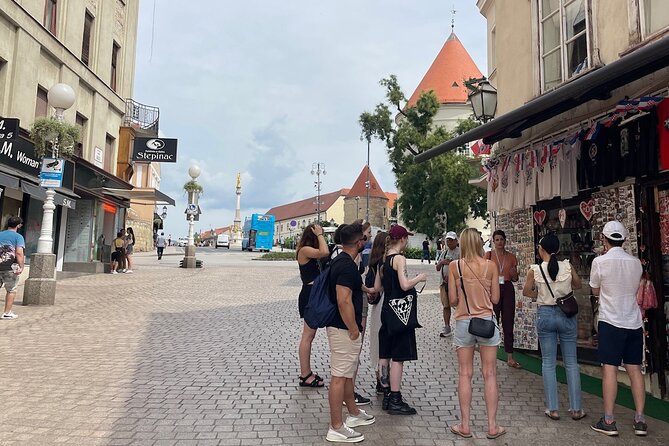
WWII underground can be part of a city stroll. This Zagreb small-group guided walk threads major landmarks into one smooth 2.5-hour loop, then adds the Gric Tunnel for a stark wartime detour.
I like that the tour feels built for real people, not a big crowd. With a limit of 16 travelers, your guide can keep pace, check in, and answer questions along the way, like the stories of how Zagreb developed from medieval settlements. I also really enjoy the mix of famous stops and everyday Zagreb, including the Dolac market and the coffee-and-bar energy on Tkalčićeva Street.
One consideration before you book: the funicular ride is listed as included, but the funicular is noted as closed for renovation until March 2026, so you may end up walking more stairs than you expect. The WWII tunnel stop can also be unavailable if events are happening inside.
In This Review
- Key highlights you’ll actually care about
- Zagreb by Foot, Plus the Gric WWII Tunnel
- Starting at Zrinjevac: where Zagreb’s story begins
- Jel ačić Square to the Cathedral: learning the city’s “why”
- Dolac market and Tkalčićeva Street: the local rhythm portion
- Gric Tunnel and the WWII story you can feel
- Funicular ride status and why stairs matter in the Upper Town
- Lotrščak Tower and noon cannon: a timed moment worth planning around
- Upper Town Gradec: panoramas, parliament seats, and St Mark’s roof
- Stone Gate and finishing at Ban Jelačić Square
- Price and value: what $24.20 really buys you
- Small-group reality: what the 16-person limit means for your day
- Practical tips for walking Zagreb without turning it into a chore
- Should You Book This Zagreb Walking Tour?
- FAQ
- How long is the Zagreb small-group walking tour with WWII tunnels?
- What is the price per person?
- How many people are in the group?
- What language is the tour offered in?
- Where do I meet, and where does the tour end?
- What’s included in the ticket price?
- Is the funicular ride included if it’s under renovation?
- Will the WWII Gric Tunnel always be open during the tour?
- Can I cancel for a full refund?
Key highlights you’ll actually care about
- Gric Tunnel during WWII, a memorable shift from postcard Zagreb to wartime reality
- Lotrščak Tower and the cannon at noon, timed so you have a strong chance to catch it
- Upper Town Gradec sights, including Strossmayer promenade and St Mark’s colorful roof
- Dolac market and Tkalčićeva Street, where you get a feel for daily local rhythm
- Small-group size (16 max), which keeps questions and conversations in the mix
- Stone Gate Petrini Pyli, including a chapel tied to Our Lady, patron saint of Zagreb
Zagreb by Foot, Plus the Gric WWII Tunnel
This tour works because it doesn’t treat history like a museum lecture. You walk through Zagreb in the same order your eyes would travel on your own, and your guide keeps connecting the dots between medieval life, modern governance, and wartime survival.
The headline is the WWII Gric Tunnel stop. Even if you’ve read about the war before, stepping into a site like this changes the scale fast. One of the biggest “wow” moments on the route is also surprisingly simple: the daily noon cannon from Lotrščak Tower. It turns a viewpoint stop into a lived-in Zagreb moment.
And yes, you still get the classic sights. You’re not just doing one neighborhood or one theme. You’re getting a usable overview of the city’s layout, which matters a lot when you only have a day or two in Zagreb.
More walks through the Upper Town, St Mark's roof and the Dolac stalls below.


Starting at Zrinjevac: where Zagreb’s story begins
The tour kicks off at Zrinjevac Park, right in front of the meteorological station. That little display of temperature and barometric pressure sets the tone: Zagreb is a city of details, not just big monuments.
From this starting point, the walk makes sense right away. You’ll move toward the city’s core while learning how the Croatian capital developed from older eras into what you see today. The pace here is usually relaxed enough for first-timers, and it’s a good time to get your bearings.
One practical note: because the funicular may not be running depending on the renovation schedule, you might want to mentally prepare for extra walking and some stairs later.
Jel ačić Square to the Cathedral: learning the city’s “why”
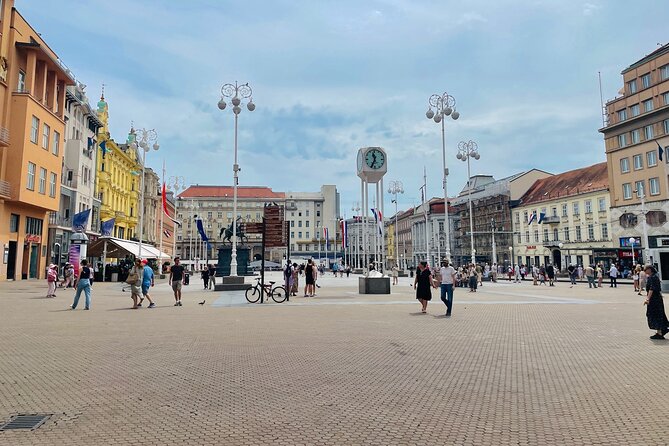
Next comes Ban Josip Jelačić Square, Zagreb’s main meeting point. It’s also where the guide explains how the city got its name, so you’re not just looking at a big open space. You’re understanding why that space matters to locals.
From there, you head to the Cathedral of Zagreb. The cathedral is described as monumental and neo-gothic, and it really is the kind of stop that resets your sense of scale. You’ll spend a short time here, but it’s long enough to take in the façade and let the guide’s context land.
If your tolerance for standing is low, you’ll still be fine, because each stop is kept to a reasonable chunk of time. Just remember: this is a walking tour, so comfort comes from shoes more than from sitting down.
More routes down into the Gric wartime tunnels under the old town.
Dolac market and Tkalčićeva Street: the local rhythm portion
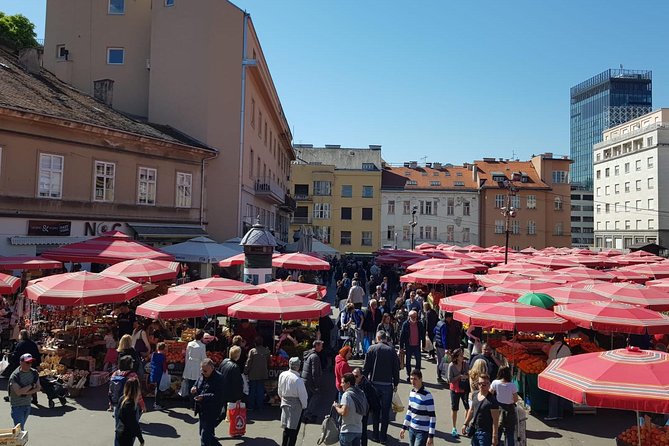
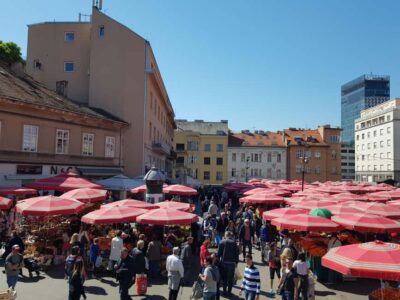
You’ll reach Dolac Market, described as the largest farmers market of Croatia. This is the part of the tour that helps you feel Zagreb as a place where people shop, eat, and meet—not just a place to photograph.
Dolac is also tied to food culture, including a statue to Kumica, and the guide shares what that points to in Croatian cuisine. If you’re the type who likes to connect meals to places, this stop is one of the most satisfying.
Now the catch: Dolac Market is closed for afternoon tours and on public holidays. So if your schedule leans later in the day, you may want to double-check whether your tour date lines up with market hours.
After Dolac, the route heads to Tkalčićeva Street, often called the bar street. You’ll hear how locals think about lounging, coffee culture, and spending time outside. One of the nice things here is that you’re not asked to do anything formal; you just absorb the atmosphere while the guide talks.
If it’s raining, Tkalčićeva can still be fun because it’s full of people and movement. But if you prefer dry comfort, bring a light rain layer and keep your phone protected.
Gric Tunnel and the WWII story you can feel
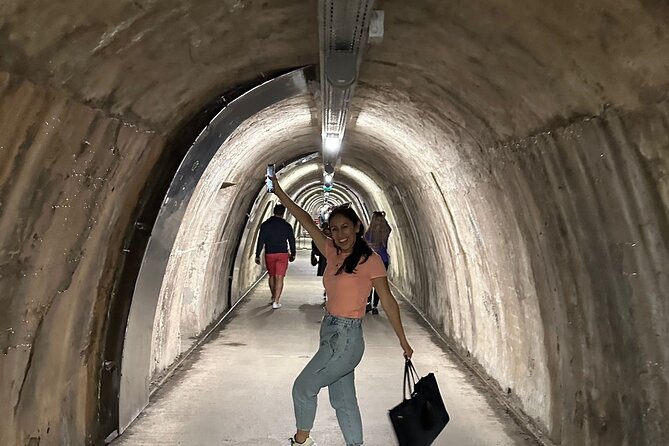
Then you get to the main event: Tunel Gric, built during WWII. It’s a short stop on paper, but it tends to be one of the strongest “I’ll remember this” moments because it changes the vibe instantly.
Important reality check: the tunnel may be closed if there’s an exhibition, theatre show, or similar event happening inside. When that happens, the tunnel stop may not be visitable. There’s no way to guarantee it, so I’d think of the tunnel as a bonus that you hope for, not the only reason to book.
What makes this work well on a walking tour is that it doesn’t float in isolation. You’ve already seen the cathedral, the square, and the older layout of the city by the time you reach the underground site. That sequence helps the WWII context stick.
Funicular ride status and why stairs matter in the Upper Town
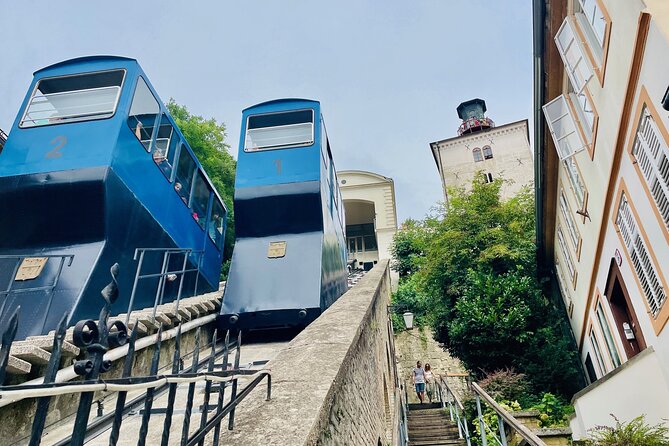
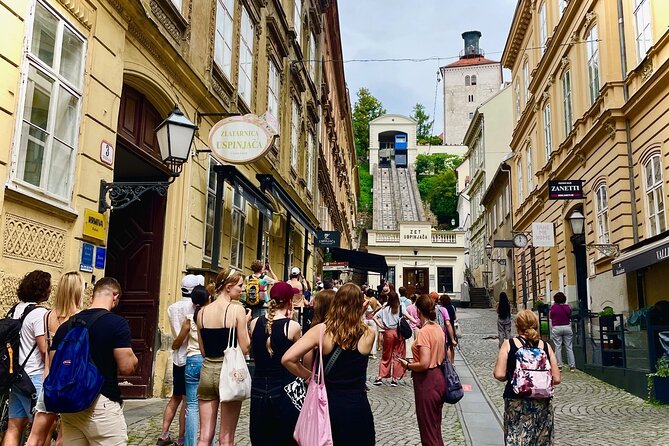
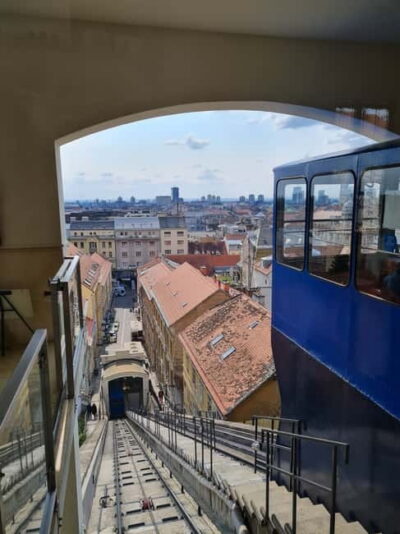
The tour also includes a funicular ride in the plan. Zagreb’s funicular is famously described as the shortest in the world and also the oldest public transportation in the city, with almost 135 years of service and local joy.
But here’s the practical issue: the funicular is noted as closed for renovation until March 2026. If you’re traveling during or near that window, you should expect the tour could mean more walking up/down than you planned for.
This matters most because the rest of the route climbs into the Upper Town (Gornji Grad) area. Even if you’re athletic, the combination of cobblestones, short distances between stops, and stairs can add up. Pack for it the way you would for a day of hills, not a flat city stroll.
Lotrščak Tower and noon cannon: a timed moment worth planning around
Near the end of the route, you’ll reach Lotrščak Tower, where the Gric cannon fires each day at noon. This isn’t just a trivia stop. It’s the kind of moment you can build a memory around.
A number of guides and groups nail this timing well, with at least some tours arriving in time for the noon shot. If you like “only-in-this-place” moments, this is the kind you’ll remember even after the photos fade.
From a value standpoint, it’s a smart inclusion. You’re getting a free, daily event built into a guided walk, which means you’re not paying for a paid attraction on top of everything else.
Upper Town Gradec: panoramas, parliament seats, and St Mark’s roof
Once you reach the Upper Town (Gradec), the tour shifts into medieval-and-modern blend. Zagreb’s Upper Town is one of two medieval settlements that formed the city, so you’re walking on ground that still communicates that older layout.
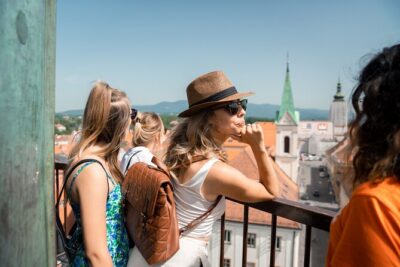
You’ll also walk along Strossmayer promenade, described as a top spot for panoramic views over Zagreb rooftops. This is where your camera gets a workout, but it’s also a great place to pause and actually orient yourself for the rest of your stay.
The guide will point out the Museum of Broken Relationships area from the outside and also show you where the Croatian Parliament and Government seats are. Those details help you understand why this part of town feels both historic and official.
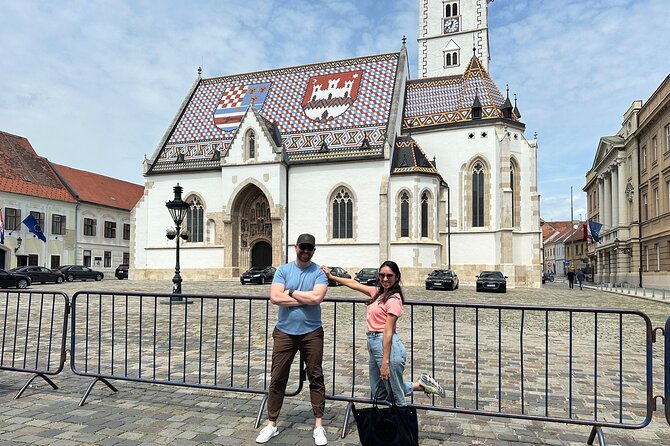
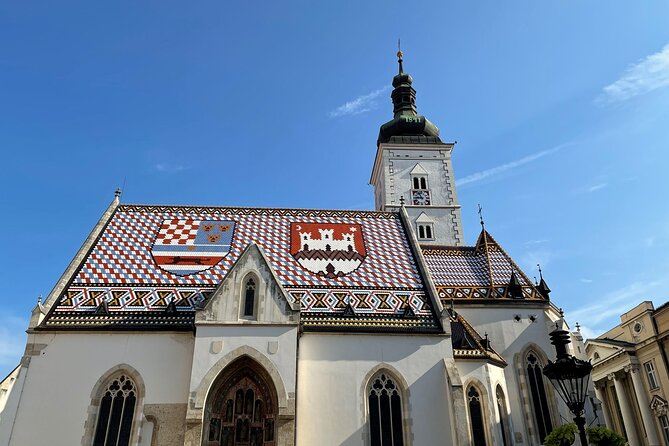
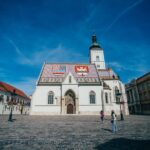
Finally, you’ll reach Saint Mark’s Church and its famous colorful roof. It’s short, but it’s a necessary stop. The roof is one of those visual anchors for Zagreb, and the guide’s context helps you see it as more than a pretty surface.
Stone Gate and finishing at Ban Jelačić Square
The last stretch takes you through Petrini Pyli (Stone Gate), described as the only medieval city gate that survived to the present day. That alone makes it worth the walk, especially if you’ve already seen “modern” city streets all day.
Inside the gate area is a small chapel with a picture of Our Lady, tied to her role as patron saint of Zagreb. Even though the stop is brief, it’s meaningful because you’re ending at a place where religious identity meets city history in a small footprint.
The tour concludes back at Ban Jelačić Square, where there’s always activity. It’s a good ending point because it’s central. After the walk, you can use the orientation you’ve built to choose where to go next for dinner, drinks, or a second round of sightseeing.
Price and value: what $24.20 really buys you
At $24.20 per person for roughly 2 hours 30 minutes, this tour is priced like a low-cost add-on that actually pays you back. You’re getting a licensed local guide and a tightly packed route through major landmarks, with extra inclusions like the funicular ride and the chance to experience the WWII tunnel and the cannon moment.
The main value isn’t one single site. It’s the way the tour strings together the city’s layers: medieval squares, a major cathedral, daily life at Dolac, a bar-street café culture break, a WWII underground stop, and then Upper Town views.
If you’re trying to plan your first day in Zagreb, this is the kind of tour that can save you time later. A good orientation walk helps you understand where neighborhoods start and how the city “tilts” toward the Upper Town.
Small-group reality: what the 16-person limit means for your day
A cap of 16 travelers changes the experience. In a crowd, you rush. In a small group, you can slow down when a question pops up, and your guide can adjust the rhythm if people are moving at different speeds.
The best feedback about this tour consistently points to guides who stay engaged and answer questions with patience. Names showing up strongly in the experience include Petra, Tom, Maya, and Tomislav, and the tone that comes through is enthusiastic, story-driven, and practical.
That said, no tour is perfect. A small number of negative notes mention time-management issues and an unfriendly tone with one guide, plus occasional “too long at stops” or “too much idle time” complaints. So if you’re traveling with someone who gets impatient in crowds, or you have a tight schedule later, show up early, keep expectations realistic, and communicate if the pace feels off.
Practical tips for walking Zagreb without turning it into a chore
Bring the right gear and you’ll enjoy this much more.
- Wear comfortable walking shoes. Upper Town routes can mean cobblestones and stairs, especially if the funicular ride can’t happen on your date.
- Plan for weather. Rain can make standing stops less pleasant, and at least one review noted the tour felt less comfortable on a wet day.
- If you’re sensitive to hearing, position yourself well. Some notes mention a guide who was softly spoken, so close standing helped.
- Expect short stops, not long museum time. The tour is designed to cover a lot, which is great for first-day orientation but not ideal if you want to linger deeply at every building.
- If Gric Tunnel or the funicular are closed due to events or renovation status, don’t panic. You’ll still cover the main historic and city-view highlights, just with a different emphasis.
Should You Book This Zagreb Walking Tour?
I’d book it if you want a first-day overview that covers a wide range in just one morning/afternoon window: main squares, a big cathedral, market life, WWII tunnel history, and Upper Town views.
I’d think twice if you need a guaranteed funicular ride during the renovation period, or if entering the Gric Tunnel is the only reason you’re going. Because the tunnel can be unavailable for events, it’s smart to treat it as a “hope to see it” highlight rather than a must-do with no Plan B.
If your goal is practical orientation and you like learning city stories while you walk, this one fits well. With the small-group cap and the noon cannon moment, it’s one of the better ways to start Zagreb with context instead of confusion.
FAQ
How long is the Zagreb small-group walking tour with WWII tunnels?
It lasts about 2 hours 30 minutes.
What is the price per person?
The price is listed as $24.20 per person.
How many people are in the group?
The tour is limited to a maximum of 16 travelers.
What language is the tour offered in?
It is offered in English.
Where do I meet, and where does the tour end?
You meet at Zrinjevac 2, 10000 Zagreb, Croatia, and the tour ends at Ban Jelačić Square (Trg bana Josipa Jelačića, 10000 Zagreb).
What’s included in the ticket price?
The price includes a licensed local guide and also includes a ride on the city funicular.
Is the funicular ride included if it’s under renovation?
The information provided says the funicular is closed due to renovation until March 2026, so the ride may not be possible during that period.
Will the WWII Gric Tunnel always be open during the tour?
No. The WW2 tunnel may be closed to visitors if there is an event inside, such as an exhibition or theatre show.
Can I cancel for a full refund?
Yes. You can cancel up to 24 hours in advance for a full refund. If you cancel less than 24 hours before the start time, the amount paid is not refunded.
More Tour Reviews in Zagreb
More WWII Tunnel Tours

More Upper & Old Town Walks
Not quite it? More Zagreb tours and day trips
- Jump into Zagreb: Walking Tour with local guide
★ 4.8 · 3 reviews - Zagreb : Highlights Walking Tour With A Guide
★ 4.7 · 3 reviews - Zagreb Food Tour: Bite into Traditional Dishes and Flavors
★ 5.0 · 3 reviews - Zagreb to Split private transfer with National park Plitvice lakes guided tour
★ 5.0 · 3 reviews - Plitvice Lakes and Rastoke Private Day Tour from Zagreb
★ 5.0 · 3 reviews - Plitvice Lakes Private Guided Tour from Zagreb with Transfer to Split
★ 5.0 · 3 reviews - Private transfer from Zagreb to Zadar with Plitvice Lakes private tour
★ 5.0 · 3 reviews - Plitvice Lakes Hidden Gems from Zagreb
★ 5.0 · 3 reviews
Zagreb WWII Tunnels Tours, compared.
 ★ 5.0Best of Zagreb with the WW2 TunnelsFrom $23973 reviews
 ★ 4.9Small Group Walking Tour City Center and WW2 TunnelsFrom $23895 reviews
 ★ 4.9City and WWII Tunnels Walking TourFrom $23845 reviews
 ★ 4.9Guided City Tour with WWII TunnelsFrom $23155 reviews
 ★ 5.0Jump into Zagreb – Small Group walking tour with WWII TunnelFrom $3016 reviews
Browse the lists this tour appears in