
Reviewed · MEDVEDNICA & NATURE PARK HIKES FROM ZAGREB
Zagreb in a day including cable car to Medvednica Nature park
Zagreb in one day needs good pacing. This private tour strings together Zagreb’s landmarks with real history talk, then lifts you up to Medvednica via cable car, so your day changes scenes without feeling rushed. You’ll also get the kind of guide attention most people never manage on a group bus.
I especially love the live commentary that keeps the stories straight, and the way guides like Bernarda and Aleksandar are praised for tailoring the route to your interests and your time limits. I also like that you get hotel pickup and private transportation for the driving parts, so you spend your energy where it matters: walking and looking.
One consideration: this is a full day with cobblestones and some climbing, so plan for moderate fitness. And since you’re heading into the mountain, you’ll want to dress for changing weather.
In This Review
- Key things to know before you go
- A Zagreb Day Plan That Moves Like a Local
- Zrinjevac, Ban Jelačić Square, and Dolac Market: The City Starts Here
- Kaptol Church Views and St. Francis: Two Very Different Ways to See Zagreb
- Tkalčićeva Street, Krvavi Most, and Grič Tunnel: The City’s Hidden Underlayers
- The Funicular to the Upper Town, Lotrščak Cannon, and the Power of Gradec
- Stone Gate Candles and Radićeva Street: Little Rituals That Feel Big
- Theater, Art Pavilion, and the Main Railway Station: Zagreb’s “Born Modern” Face
- Mamutica and Mirogoj: Zagreb Beyond the Old Center
- Sljeme Cable Car to Medvednica: Where the Day Gets Fresh Air
- Price, Comfort, and Time: Does $300.35 Per Person Make Sense?
- Should You Book This Zagreb and Medvednica Private Day?
- FAQ
- FAQ
- How long is the Zagreb and Medvednica tour?
- Where does the tour start and end?
- Is hotel pickup included?
- Is this a private tour?
- What language is the guide?
- What transport and attractions are included?
- Do I need tickets for everything?
- What about weather and mountain conditions?
Key things to know before you go
- Private guide focus: just your group, with live history explanations as you walk
- Convenient transport: air-conditioned vehicle handles the moving between areas
- Cable car to Medvednica: included, with scenic views and a 20-minute ride
- Zagreb transport classics: the funicular up to the Upper Town is included
- Works in many weather setups: the day runs in all weather, but mountain plans still matter
A Zagreb Day Plan That Moves Like a Local
Zagreb has two tempos. In the morning and early afternoon, it’s all squares, churches, and markets. Later, it flips to viewpoints and forests on Mount Medvednica. This tour works because it doesn’t treat the city like a list; it moves you through the logic of neighborhoods, then changes to mountain air before you get tired of walking.
I like the structure because it’s flexible. Your guide is actively explaining as you go, but they can also slow down or speed up depending on weather and how your group is feeling. One of the most praised parts is that guide attention stays on your group, not on herding people.
And yes, you still get the postcard scenes: Upper Town views, the famous cannon at noon, and those landmark city gates. But you also get the “wait, what is that?” stops—like a WWII tunnel under the hill—so the day feels more real than a quick hit of famous photos.
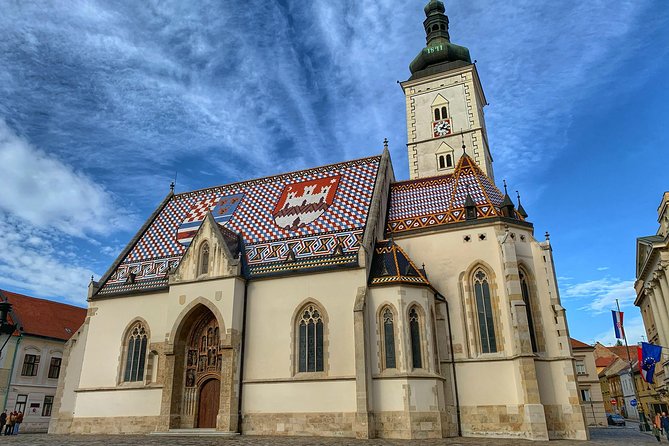
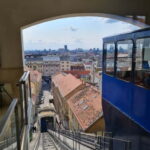
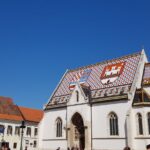
More walks through the Upper Town, St Mark's roof and the Dolac stalls below.

Zrinjevac, Ban Jelačić Square, and Dolac Market: The City Starts Here
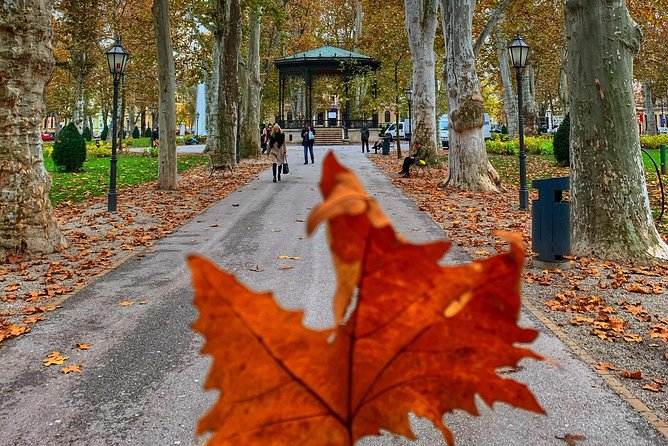
You begin at Zrinjevac, a park square that feels like Zagreb’s living room. It’s part of the famous green network of parks and squares often called the Green Horseshoe, and it’s lined with grand plane trees and classical sculptures. Even if you’re not a park person, it’s a smart first stop because it helps you get your bearings fast.
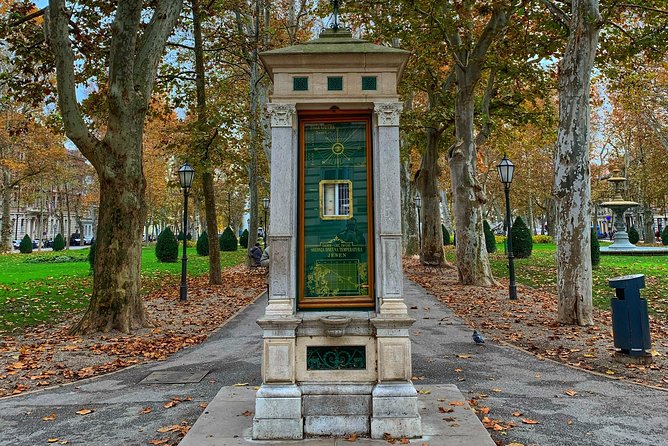
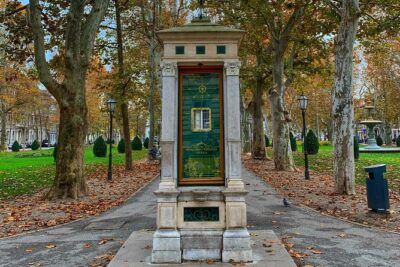
One specific detail I really enjoy here is the meteorological post from 1884. It’s a cast-iron column with instruments measuring things like temperature, atmospheric pressure, and humidity—history plus science, in the middle of the city. It’s the kind of small oddity that makes Zagreb feel less touristy and more like a place that keeps functioning.
From there you move to Ban Josip Jelačić Square, the central hub where the Upper and Lower Towns meet. The statue of Ban Jelačić is iconic, and your guide can point out how the statue and the square tie into national identity and political change over time. The square is also surrounded by architecture across eras, so it’s a good “architecture warm-up” before the church and fortress areas.
Then comes Dolac Market, often called the belly of Zagreb. You get the open-air level with produce and flowers, plus the covered lower level for butchers, fishmongers, and cheese vendors. It’s established in 1930, and it’s still doing what markets do best: connecting you to local routines. If you want a bite to eat later, this is the best place to understand what’s fresh and what people are buying.
Practical note: this is a walking-through market. You shouldn’t expect a long shopping spree unless your guide schedules extra time, but it’s perfect for seeing how the city eats.
Kaptol Church Views and St. Francis: Two Very Different Ways to See Zagreb
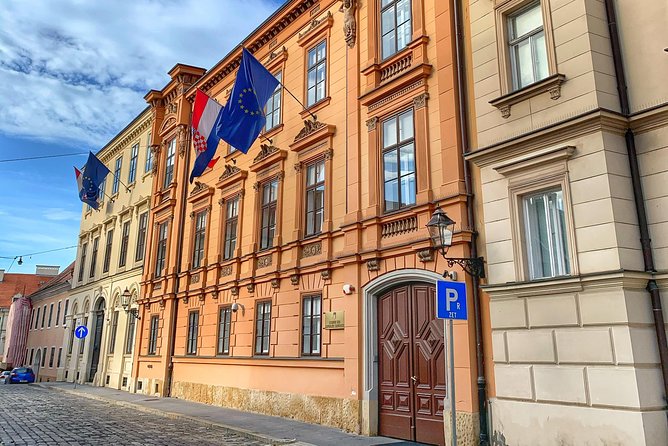
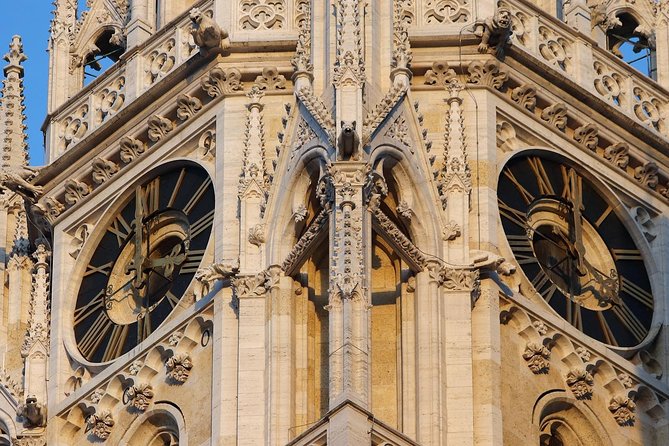
Your day moves into Kaptol, the medieval religious core, starting with the Cathedral of Zagreb (Cathedral of the Assumption of the Blessed Virgin Mary). It’s Gothic, with twin spires that dominate the skyline, and it’s the tallest building in Croatia. The cathedral’s story includes reconstructions after the 1880 earthquake, so you’ll understand why the architecture feels both historic and scarred-by-time.
Inside, you’ll typically find intricate altars, stained glass, and tombs connected to important figures. The key value of a guided visit here isn’t just looking—it’s knowing what you’re looking at, especially since a cathedral can feel like a forest of details if you don’t have context.
Next is St. Francis of Assisi Church in the Opatovina area. Compared to the cathedral, it’s more modest, which is exactly why it works. It’s a quieter stop where the atmosphere is more about calm and preservation than scale. You also get the sense of how different religious buildings in Zagreb reflect different periods and reconstruction efforts.
If you’re short on time or tired of churches, don’t worry. Your guide can help you focus on the parts that match your interests—architecture, art, or the story of how Zagreb rebuilt itself after major shocks.
More walks up Medvednica, the green hill that leans over the city.
Tkalčićeva Street, Krvavi Most, and Grič Tunnel: The City’s Hidden Underlayers
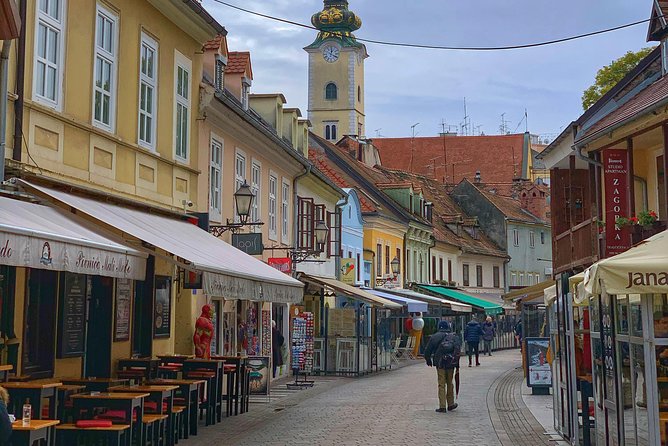
One of Zagreb’s best “walk-and-talk” stretches is Tkalčićeva Street. It’s a pedestrian-friendly corridor between Kaptol and Gradec, lined with cafes, small shops, and colorful facades. Historically, it was tied to the old stream Medveščak, and it once served as a border between rival towns. Walking it with a guide helps you notice how the street’s layout matches the old city logic.
Then you shift to Krvavi Most, literally Bloody Bridge. It doesn’t have a bridge anymore, but the name comes from medieval clashes between the rival towns of Kaptol and Gradec. This is a great example of how Zagreb keeps memory in the street names. The square-ish corners and nearby cafes can make it feel casual, but your guide will explain why the area has that dark nickname.
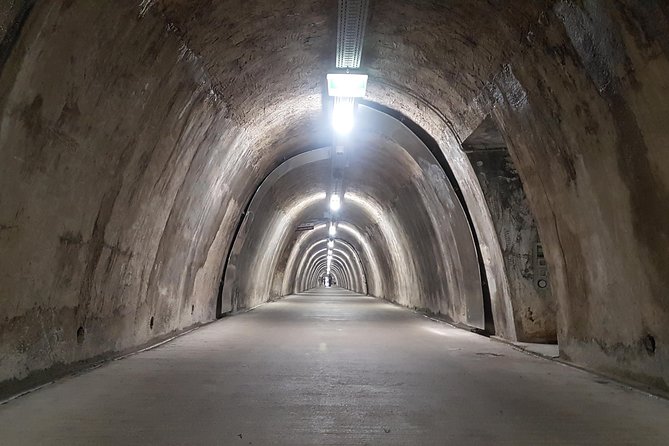
After that, you get your most cinematic stop: Grič Tunnel. Built during WWII in 1943, it was designed as a bomb shelter and a safe passage for civilians. The tunnel runs about 350 meters long and has multiple entrances. After the war it faded from regular use, then recently returned as a pedestrian passage for exhibitions and cultural events.
Here’s what I like about this stop: it gives you a literal underground view of history. The cool air, the arched walls, and the change from street noise to tunnel quiet make it memorable even if you’re not a WWII buff.
The Funicular to the Upper Town, Lotrščak Cannon, and the Power of Gradec
You’ll ride the Zagreb Funicular (Zagrebačka uspinjača), one of the oldest and shortest funiculars in the world. It’s only 66 meters long, takes about a minute, and connects the Lower Town to the Upper Town. The carriages are kept in vintage style, and the ride gives views down toward Ilica Street and up toward Lotrščak Tower.
Once you arrive up top, head toward Lotrščak Tower. The tower is a medieval defensive structure built in the 13th century. Today it’s famous for the Grič cannon, which fires every day at exactly noon, a ritual that started in 1877 as a time signal. If your timing lands near midday, you’ll hear the boom and feel why it matters to locals. Even if you miss the sound, the tower is still a classic “Upper Town orientation” moment.
Important: admission for the tower area isn’t listed as included, so if you want to go inside or access specific spaces, bring a bit of extra money just in case.
Now you’re in Gornji Grad (Gradec), the historic Upper Town. It’s defined by narrow cobblestone streets and Baroque buildings, and it was originally a fortified settlement before merging with Kaptol in 1850. The architecture here isn’t only pretty; it’s built to show power and defense.
You’ll likely pass St. Mark’s Square (Trg svetog Marka), with St. Mark’s Church. The church roof is the headline: tiled colors that show the coats of arms of Croatia, Dalmatia, Slavonia, and Zagreb. The square is also tied to politics and state life, with the Croatian Parliament (Sabor) and Banski Dvori located here. So while your eyes are on the roof, your guide will connect it to how the city functions as a civic center.
Nearby, there’s also the Zagreb Old Town Hall (Stara gradska vijećnica) on Ćirilometodska Street, dating to the 15th century. This is one of those places you might skim on your own, but with a guide you’ll understand why that modest façade matters in Zagreb’s administrative story.
Stone Gate Candles and Radićeva Street: Little Rituals That Feel Big
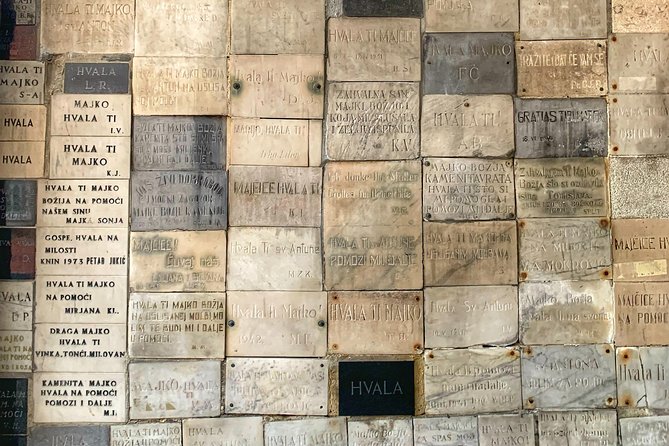
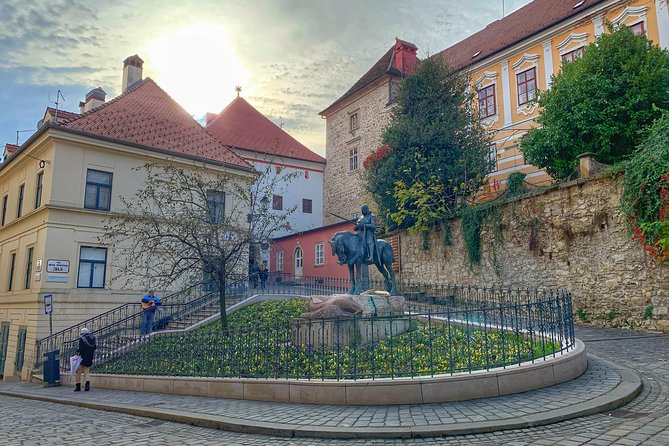
From the civic square, you head toward Stone Gate (Kamenita Vrata), one of Zagreb’s most important landmarks. It’s the last remaining original city gate from medieval fortifications, dating to the 13th century. Inside the archway is a chapel-like space housing a painting of the Virgin Mary with Child, believed to have survived a devastating fire in 1731 that destroyed much of the nearby wooden structures.
That miracle story is why this spot is still active. People stop to light candles and say prayers, and you’ll see votive offerings. It’s not a museum moment—it’s a lived ritual. If you like travel that feels human and not just architectural, this is the stop.
Walking along Radićeva Street helps tie it together. The street runs between Ban Jelačić Square and the Stone Gate area and mixes medieval and 19th-century elements. With your guide, it becomes more than a corridor; it turns into a link between Zagreb’s older street grid and the areas people actually walk through day to day.
Theater, Art Pavilion, and the Main Railway Station: Zagreb’s “Born Modern” Face
After the medieval core, Zagreb shifts into late-19th-century and early-modern ambitions. You’ll see the Croatian National Theatre (HNK) at Trg Republike Hrvatske, a Neo-Baroque yellow building opened in 1895. It was designed by Viennese architects Hermann Helmer and Ferdinand Fellner. Around the square you also find institutions connected to drama and education, plus The Well of Life by Ivan Meštrović.
Next is the Art Pavilion (Umjetnički paviljon u Zagrebu) at King Tomislav Square. It dates to 1898 and was originally built for an exhibition and then reassembled in Zagreb. The pavilion is known for its secessionist and historicist blend, plus a glass dome and that distinctive yellow façade. If you want a break from walking rooftops and churches, this is a visually lighter stop that still has real context behind it.
You also pass the Main Railway Station (Glavni kolodvor), opened in 1892. It’s a major gateway and a large transport hub, designed by Hungarian architect Ferenc Pfaff, with a neoclassical/historicist feel and a grand façade. Even if you don’t plan to take the train, it’s worth seeing because it shows how Zagreb connected itself to Europe—literally by rail.
Mamutica and Mirogoj: Zagreb Beyond the Old Center
Zagreb isn’t only medieval layers. The tour also takes you into New Zagreb and the cemetery hills.
Mamutica is a giant apartment complex from the 1970s, built in Brutalist style. It’s over 240 meters long and has more than 1,100 apartments, making it the largest building in Croatia and one of the largest in Europe. Its name means mammoth, and your guide can explain the social meaning: this is architecture for housing thousands, built with raw concrete confidence typical of socialist-era construction.
You might love it for the scale or feel a bit cautious about it, but either reaction is useful. It gives Zagreb balance. If the Upper Town is about centuries of defense and rule, Mamutica is about a different era’s idea of how cities should house people.
Then you head to Mirogoj Cemetery, established in 1876 and designed by Hermann Bollé. It’s known for ivy-clad arcades and grand domes, and it feels like a park as much as a burial ground. There are tombs of notable Croatians, plus sculptures and well-maintained paths.
One of the most striking points here is that Mirogoj welcomes people of all faiths. With a guide, it becomes more than quiet sightseeing. It turns into a lesson in how Zagreb shaped public spaces for different communities.
Sljeme Cable Car to Medvednica: Where the Day Gets Fresh Air
Now for the big scene change: Žičara Sljeme, the cable car to Mount Medvednica. This ride takes about 20 minutes and uses spacious modern cabins. It was reopened in 2022 after major renovations, so you’re not just paying for views; you’re riding something that’s comfortable and current.
At the top, you reach Sljeme, the highest peak at 1,033 meters. Medvednica itself is a protected nature park, about 42 kilometers long, with dense forests and trails. This is where hiking and mountain biking happen in warmer months, and where skiing is a big deal in winter.
The Sljeme ski resort has hosted FIS World Cup events, which tells you Medvednica isn’t only a local escape. Your guide can also point you toward the medieval Medvedgrad fortress and typical areas for enjoying mountain lodges and Croatian food, depending on conditions and the time you have.
Practical advice: you’ll likely be cooler up top than in the city, even in the same day. Bring a layer and something windproof. If the weather is foggy, you’ll still get the experience of forests and trails, but your view photos will be a different story.
Price, Comfort, and Time: Does $300.35 Per Person Make Sense?
At $300.35 per person, you’re paying for two main things: expert guidance across many stops and transportation that removes stress. If you try to stitch together these exact sights on your own, you’d spend more time figuring out transit, tickets, and sequencing—especially once the mountain cable car and funicular are in the mix.
What makes the price feel more fair is what’s included: a private tour, air-conditioned vehicle, and the cable car up to Medvednica. The funicular is included too. Your guide also keeps the day smooth by explaining what you’re seeing right in the moment, instead of giving you a list of facts you forget ten minutes later.
Food and drinks are not included, so plan for lunch on your own. Also note the pacing: this is a 6 to 8 hour day, which means fewer long breaks and more steady movement. If you like travel that’s active but not frantic, this fits well.
Should You Book This Zagreb and Medvednica Private Day?
If you want one guided day that covers both Zagreb’s old cores and a real mountain escape, I’d say yes. This tour is a strong choice when you care about context—how the cathedral connects to disaster and rebuilding, why street names like Krvavi Most exist, and what the WWII tunnel tells you about daily life during war.
Book it if you also value comfort. Hotel pickup plus private transport for the driving stretches means you aren’t constantly zigzagging between areas. And since the cable car and funicular are included, you don’t have to spend your time on logistics.
Skip it only if you’re looking for a slow, lounge-around day with minimal walking. Cobblestones, stairs, and the Upper Town hill means you should come with comfortable shoes and a willingness to move.
FAQ
FAQ
How long is the Zagreb and Medvednica tour?
It runs about 6 to 8 hours.
Where does the tour start and end?
It starts at Zrinjevac 2, 10000 Zagreb, Croatia, and ends back at the meeting point.
Is hotel pickup included?
Yes, pickup is offered.
Is this a private tour?
Yes. It’s a private tour/activity, and only your group participates.
What language is the guide?
The tour is offered in English.
What transport and attractions are included?
The package includes comfortable private transportation for driving and the cable car to Medvednica. The funicular railway is also included.
Do I need tickets for everything?
Many stops list admission as free, but Lotrščak Tower admission is not included. You should plan for possible extra entry costs for that stop.
What about weather and mountain conditions?
It operates in all weather conditions, but the experience requires good weather. If it’s canceled due to poor weather, you’ll be offered a different date or a full refund.
More Tour Reviews in Zagreb


More Medvednica Hikes

More Upper & Old Town Walks
Not quite it? More Zagreb tours and day trips
- Jump into Zagreb: Walking Tour with local guide
★ 4.8 · 3 reviews - Zagreb : Highlights Walking Tour With A Guide
★ 4.7 · 3 reviews - Zagreb Food Tour: Bite into Traditional Dishes and Flavors
★ 5.0 · 3 reviews - Zagreb to Split private transfer with National park Plitvice lakes guided tour
★ 5.0 · 3 reviews - Plitvice Lakes and Rastoke Private Day Tour from Zagreb
★ 5.0 · 3 reviews - Plitvice Lakes Private Guided Tour from Zagreb with Transfer to Split
★ 5.0 · 3 reviews - Private transfer from Zagreb to Zadar with Plitvice Lakes private tour
★ 5.0 · 3 reviews - Plitvice Lakes Hidden Gems from Zagreb
★ 5.0 · 3 reviews
Medvednica & Nature Park Hikes from Zagreb, compared.
 ★ 5.0Private eclectic hiking experience of Samobor HillsFrom $21610 reviews
 ★ 4.5Medvednica Hiking and Chestnuts Picking Tour from ZagrebFrom $704 reviews
 ★ 5.0Day Hike in National Park Risnjak from ZagrebFrom $2083 reviews
 ★ 5.0Perceive Zagreb Like a Local – Medvednica Nature Park HikingFrom $1043 reviews
Browse the lists this tour appears in