
Reviewed · COMMUNIST & YUGOSLAV-ERA HISTORY TOURS
Back to Yugoslavia Private City Tour in Old-Timer Yugo Car
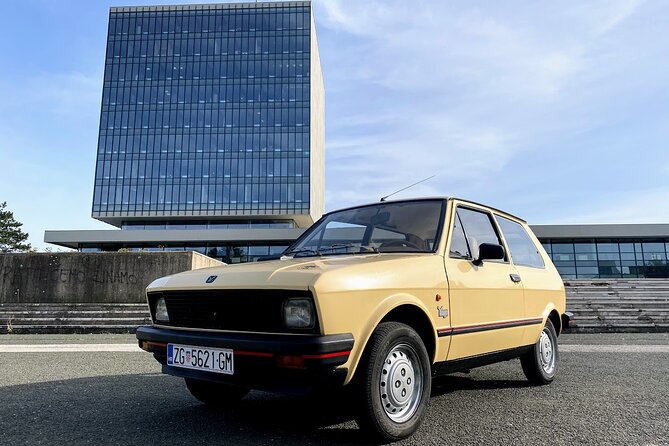
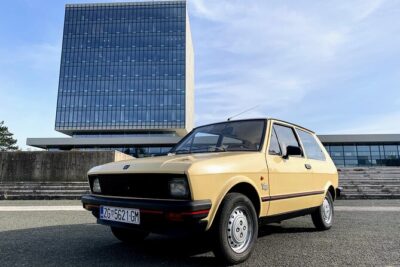
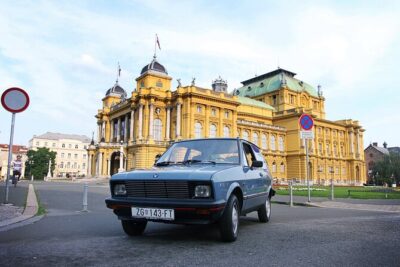
Zagreb changes fast when you ride in a Yugo. This private Back to Yugoslavia tour uses an original, classic 35-year-old Yugo to connect political-era architecture and everyday life—from communist housing blocks to memorials for people who shaped Yugoslavia and Croatia. I like that you get a licensed local guide (for example, one guide named Theo used his lived-in knowledge to explain what you’re seeing), and I also like the small “focus on your interests” style of a bespoke private route.
One thing to think about: this experience works best with good weather, and you’ll have some short walks between sights while the car shuttles you around. If you’re sensitive to bumpy roads or want tons of sit-down time, plan on moving more than a pure museum day.
In This Review
- Key things I’d plan around on this tour
- Why a 35-Year-Old Yugo makes the Yugoslav story click
- Meeting at Lisinski Concert Hall: your day’s anchor point
- Gorica open-air market and the abandoned dishes factory area
- Travno and the Mammoth: socialist housing at full scale
- Kockica and The Dice: architecture built for political power
- Along the Sava River: levee walk and the Hendrix Bridge
- Lisinski and Eurovision 1990: why big stages matter
- Passing The Lady from Zagreb: a quirky Zagreb moment
- Dražen Petrović Museum–Memorial Center and Cibona Tower
- Transportation, snacks, and how much you’ll actually move
- Price and value: what $102.41 buys you (and what it doesn’t)
- Who should book this tour?
- A few smart booking tips to get the most out of your day
- Should you book Back to Yugoslavia in the Yugo?
- FAQ
- How long is the Back to Yugoslavia private city tour in the Yugo?
- Where does the tour start and end?
- Is this tour private?
- What language is the tour offered in?
- Do you get a mobile ticket?
- What happens if the weather is bad or you need to cancel?
Key things I’d plan around on this tour
- An original 35-year-old Yugo ride that turns history into a road trip feel
- A licensed private guide who can tailor what you pay attention to
- Photo stops tied to Yugoslav-era places, not just generic landmarks
- Short, specific walks (river levee, courtyards, and viewpoints) that keep energy up
- High-impact stops like the communist housing landmarks and the Dražen Petrović memorial area
- Snacks included, which helps when you’re doing 2.5 hours of moving and looking
Why a 35-Year-Old Yugo makes the Yugoslav story click
This is the kind of tour where the vehicle matters. A classic Yugo isn’t a themed prop—it’s a real time capsule that slows your pace and makes the whole day feel less like a lecture and more like a guided wander through lived-in space.
I also like that the tour is built around Yugoslav-era locations you can actually see. Instead of just hearing about the past, you stand in front of the places people would have associated with everyday routines, big-party decisions, and public symbols.
The price is about $102.41 per person for roughly 2 hours 30 minutes, which can feel like a splurge—until you remember it’s private transportation plus a licensed guide plus snacks. For many people, paying for a custom, high-touch guide in the center of Zagreb is better value than a larger-group tour that moves fast and sticks to the same script.
More of the Yugoslav years and the Homeland War, some of it from an old Yugo car.




Meeting at Lisinski Concert Hall: your day’s anchor point
The tour starts and ends at Koncertna dvorana Vatroslav Lisinski on Trg Stjepana Radića 4 (10000 Zagreb). That matters because it gives you a clean reference point in the city—easy to find, easy to orient around, and a practical base if you want to eat or shop before or after.
Lisinski is also one of the stops in the itinerary, known as a venue that hosted Eurovision in 1990. So even before you head out, you can connect the “big public event” vibe of a major concert hall with the broader Yugoslav and post-Yugoslav story the guide is tracking.
Gorica open-air market and the abandoned dishes factory area
One of the first stops is the open-air market and the abandoned dishes factory in Gorica. Even without turning it into a grim history lesson, the contrast here helps your brain understand the shift from industrial production to daily life, and from one political era to the next.
What you’ll enjoy most at this stop is the guide’s explanations tied to what you can see right now—structures, locations, and the kind of places people passed through regularly. If you like photos, this is also the sort of stop where images feel “real,” because it isn’t only monuments and plaques.
A small caution: open-air stops can be windy or sun-heavy. If you’re booking on a bright day, bring sunglasses and water habits; if it’s chilly, add a layer, because you’ll be outside for a bit.
More ways to take in the city itself.

Travno and the Mammoth: socialist housing at full scale

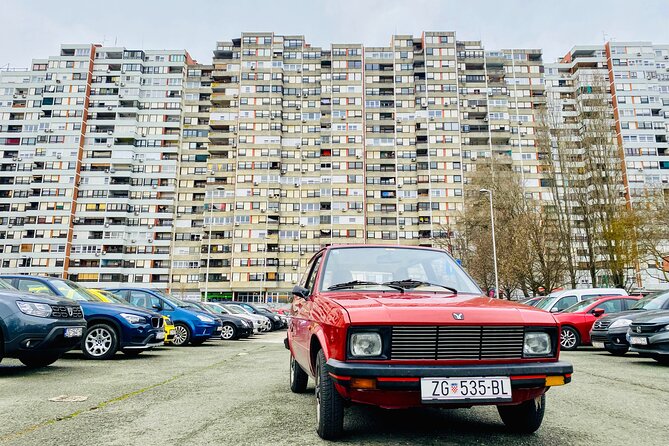
Next up is Travno, where you stop in front of The Mammoth, described as the largest apartment building in Zagreb. This is one of those sights that’s hard to fully grasp from a distance—seeing it in person gives you the scale fast, and it’s exactly the kind of landmark that helps you understand how housing was shaped by state planning.
This is where the tour’s private format really pays off. If you’re the kind of person who wants the human side of how people lived, the guide can steer the conversation toward everyday routines—how apartment blocks worked, what daily life might have felt like, and how those spaces remain part of the city’s identity.
The stop is short, so don’t treat it like a full neighborhood tour. Treat it like a quick “read the building and its message” moment, then move on.
Kockica and The Dice: architecture built for political power
You then head to Kockica, stopping at Kockica’s The Dice, a building created to house the Central Committee of Croatian Communists. That’s a powerful detail, because it immediately reframes the look of the area: you’re not just seeing a building, you’re seeing a political function turned into concrete.
Even if you’re not an architecture nerd, the “power geometry” idea usually lands. The guide can explain how these institutions shaped public life, and why the design and placement of key buildings can tell you something about priorities.
This stop is also quick. Use it for a couple of good photos, then listen closely when the guide connects what you’re seeing to the larger Yugoslav timeline.
Along the Sava River: levee walk and the Hendrix Bridge
The itinerary includes time by the Sava River, where you walk on the levee and see the Hendrix bridge. This is your palate cleanser stop. After political buildings and institutional landmarks, the river gives you breathing space, plus it’s a nice spot for views and movement.
A levee walk is usually easy, but it’s still a walk—so wear shoes you trust. If your legs are sensitive, this part is the moment to slow down and take short breaks while the guide keeps the story going.
This also helps break up the day in a good way. You’re not stuck in one long stretch of car time; you get the sense of Zagreb as a city with water lines and everyday public edges, not only a museum grid.
Lisinski and Eurovision 1990: why big stages matter
Later, you’ll get a pass by Koncertna dvorana Vatroslav Lisinski again in the flow of the day. Here the tour leans into why a major concert hall matters: the itinerary notes it as the venue that hosted Eurovision in 1990.
For me, it’s a neat connection point because Eurovision is a very public, very international moment. You can think of it as a spotlight on culture—while the rest of the day is quietly tracking political symbols. Together, they show how Yugoslavia expressed itself not only through buildings, but through public culture too.
You won’t spend all day inside. It’s more of a “look, connect, and move” stop, which is perfect for a 2.5-hour experience.
Passing The Lady from Zagreb: a quirky Zagreb moment
You’ll pass by The Lady from Zagreb, listed as an attraction you see during the route. With a stop like this, I treat it as a texture add-on: it reminds you that cities keep layers, and the past isn’t the only thing sitting on street corners.
If you like odd statues and street-level details, this kind of pass-by can be one of the more fun parts of the day. It’s short, and it doesn’t hijack your schedule—just enough to keep the route from feeling like a checklist.
Dražen Petrović Museum–Memorial Center and Cibona Tower
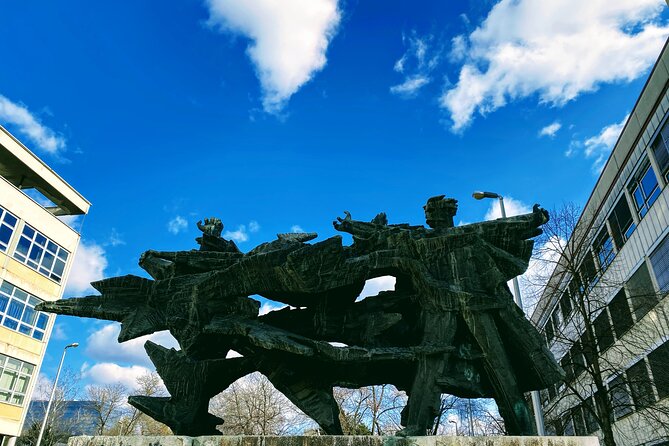
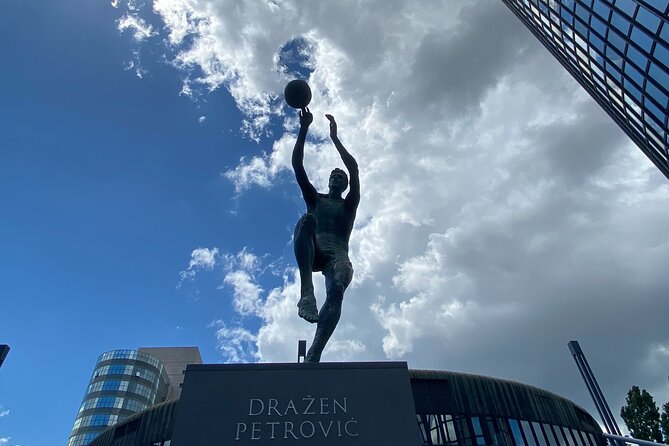
Near the end, you head to the Dražen Petrovic Museum – Memorial Center area. Here you’ll see the statue of Dražen Petrović, plus the Cibona tower, both included on the itinerary.
This is a meaningful shift in theme. The earlier stops center on communist institutions and large-scale public housing. This one connects the Yugoslav legacy to sports and memorial culture—how public figures become part of national identity, and how a city honors them in visible, everyday spaces.
It’s also a strong “wrap-up stop.” If you’ve been listening for themes all day, this is where the guide can pull the threads together: politics in stone earlier, then people and memory in the later moments.
Transportation, snacks, and how much you’ll actually move
You ride in a private setup with private transportation and included snacks. That’s a practical comfort level for a 2 hours 30 minutes route: you get time to look, time to walk briefly, and time to ride without sprinting across town.
The tour is offered in English, and it’s designed as a private, bespoke experience. That matters more than people think, because a private guide can slow down at the stops that click for you and skim the rest.
If you’re traveling with limited time, this is a compact way to “get the story” without committing to a full-day schedule.
Price and value: what $102.41 buys you (and what it doesn’t)
At $102.41 per person, the value depends on what you want from Zagreb. If you’re happy with quick photos and generic facts, you’ll likely find cheaper group options.
But if you want a licensed local guide who can connect what you’re seeing to the Yugoslav past, and you want that iconic Yugo ride as part of the experience, the pricing starts to make sense fast. You’re paying for private transportation, a custom feel, and a “historical route” that stays focused on specific sights rather than wandering.
Also, the tour is consistently rated 5 out of 5, with a 100% recommendation rate based on the available feedback. That’s a strong signal that the guide-led format works.
Who should book this tour?
This tour fits best if you fall into one of these buckets:
- You want Zagreb history tied to real places, not just museum reading
- You like guides who can explain both the big political story and the street-level reality
- You enjoy unusual experiences, especially an actual classic car ride
- You prefer a private schedule where the route can focus on what you care about
It’s also a good choice if you’ve got only half a day to learn more than the usual city highlights.
If you’re expecting a long, deep academic lecture or lots of indoor museum time, you might feel the stops are too short. The structure is meant for movement and seeing.
A few smart booking tips to get the most out of your day
This experience requires good weather, so watch the forecast when your date gets close. If the day looks rainy, consider whether you’re okay with outdoor viewing and a levee walk that could get slippery.
Because the car ride is part of the appeal, wear clothes you’re comfortable moving in. You’ll be outside for portions of the day, and you’ll also be in a vehicle for transfers between stops.
And because it’s private, you’ll likely get better results if you come with at least a few themes you care about—housing, politics, culture, sports memory. The guide can then steer the story toward your interests.
Should you book Back to Yugoslavia in the Yugo?
Yes, if you want an easy-to-handle, high-story, private tour that shows Zagreb through the lens of the Yugoslav era. The combination of licensed guide storytelling, targeted stops like The Mammoth and The Dice, and the original Yugo ride makes this feel like more than just sightseeing.
I’d say skip it if you only want mainstream highlights, hate walking at all, or need a fully weather-proof plan. Otherwise, this is a fun, focused way to learn the city’s layers in one compact morning or afternoon block.
FAQ
How long is the Back to Yugoslavia private city tour in the Yugo?
It lasts about 2 hours 30 minutes.
Where does the tour start and end?
It starts at Koncertna dvorana Vatroslav Lisinski at Trg Stjepana Radića 4, 10000 Zagreb, Croatia, and it ends back there or at a chosen location within the city limits (3 km around the main square).
Is this tour private?
Yes. It’s a private tour/activity, so only your group participates.
What language is the tour offered in?
The tour is offered in English.
Do you get a mobile ticket?
Yes, the tour includes a mobile ticket.
What happens if the weather is bad or you need to cancel?
The experience requires good weather. If it’s canceled due to poor weather, you’ll be offered a different date or a full refund. You can cancel up to 24 hours in advance for a full refund.
More Tours in Zagreb


More Tour Reviews in Zagreb

More Yugoslav-Era History Tours

Not quite it? More Zagreb tours and day trips
- Jump into Zagreb: Walking Tour with local guide
★ 4.8 · 3 reviews - Zagreb : Highlights Walking Tour With A Guide
★ 4.7 · 3 reviews - Zagreb Food Tour: Bite into Traditional Dishes and Flavors
★ 5.0 · 3 reviews - Zagreb to Split private transfer with National park Plitvice lakes guided tour
★ 5.0 · 3 reviews - Plitvice Lakes and Rastoke Private Day Tour from Zagreb
★ 5.0 · 3 reviews - Plitvice Lakes Private Guided Tour from Zagreb with Transfer to Split
★ 5.0 · 3 reviews - Private transfer from Zagreb to Zadar with Plitvice Lakes private tour
★ 5.0 · 3 reviews - Plitvice Lakes Hidden Gems from Zagreb
★ 5.0 · 3 reviews
Communist & Yugoslav-Era History Tours, compared.
 ★ 5.0Communism & Croatian Homeland War TourFrom $471,355 reviews
 ★ 4.9Communism and Croatian Homeland War TourFrom $44779 reviews
 ★ 5.0Back to Socialism Bike TourFrom $4949 reviews
 ★ 4.62.5-Hour Cycle Back to Socialism TourFrom $5725 reviews
 ★ 5.04-hour Private Zagreb & the Mountain Tour in a Yugo carFrom $12620 reviews
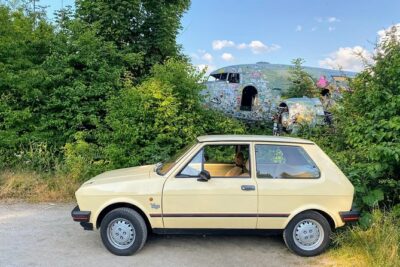 ★ 5.0Full Day Private Tour of Plitvice National Park and Željava Airbase with a YugoFrom $26112 reviews
 ★ 5.0Ex-Yugoslavian “Spomeniks” tourFrom $42111 reviews
 ★ 5.0Private Tito’s Village tour in Old-Timer Yugo carFrom $1688 reviews
Browse the lists this tour appears in