
Reviewed · ZAGREB OLD & UPPER TOWN WALKING TOURS
Zagreb City Walking Tour
Zagreb clicks into place fast with a guide. This is a small-group walking tour that keeps the focus on real landmarks and context, from the Cathedral area down into the Lower Town rhythm. I like how you’re led by a licensed local guide, with enough time for questions instead of a fast, one-way parade.
Two things I especially like: the route is built for orientation, and the ticketing is simple. The funicular ride is included, so you get that quick jump up to Gradec without scrambling for transport. Plus, pickup is available on request from city hotels or apartments, which takes the stress out of starting the day.
One drawback to consider is the pace: it’s about 3 hours with multiple short stops, so you won’t linger in every spot. If weather is rough or you’re not into walking, you may wish you had more time on your own later.
In This Review
- Key highlights at a glance
- Why this Zagreb walk starts with the right landmarks
- Price and what you actually get for $73.20
- Meeting at 10:00 and getting picked up from your hotel or apartment
- Cathedral of Zagreb: a landmark with a tough story
- Bar Street: watch the city’s everyday pulse
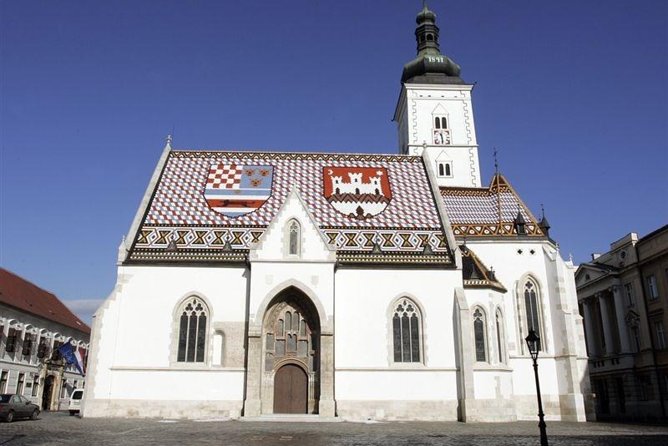
- St. Mark’s Square and Church: the view, the symbolism, the pace
- Gric cannon: a quick stop that adds local texture
- Funicular Railway to Gradec: the classic ride, and it’s included
- Ban Josip Jelacic Square to the Stone Gate: from center stage to Upper Town edge
- Dolac Market: the belly of Zagreb
- Small-group attention, and why guides like Zrinka and Diana matter
- What the itinerary rhythm teaches you about Zagreb
- Who this Zagreb walking tour suits best
- Should you book this Zagreb City Walking Tour?
- FAQ
- What is the duration of the Zagreb city walking tour?
- What time does the tour start?
- Is pickup available?
- How large is the group?
- What language is the tour offered in?
- Is the funicular ride included?
- Are admission tickets included for the stops?
- Is this a private tour?
- What is the cancellation policy?
Key highlights at a glance
- Max 15 people keeps the tour personal and question-friendly
- Licensed local guide explains what you’re seeing, not just where it is
- Funicular ticket included for the classic ride to Gradec
- Free-entry stops at major sights like the Cathedral and St. Mark’s area
- Pickup on request from hotels or apartments across the city
- Dolac Market stop gives you a strong sense of everyday Zagreb
Why this Zagreb walk starts with the right landmarks
Zagreb can feel like two cities if you’re sightseeing on your own: the Lower Town with its street energy, and the Upper Town (Gradec) with the views and older structure. This tour is designed to connect both in about three hours, so you leave with a mental map, not just photos.
I like that the stops are practical and iconic. You begin with a major landmark, then you move through the squares and gates that help explain how Zagreb developed and how people move through the city today.
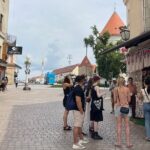
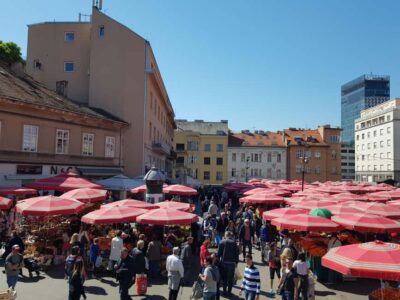
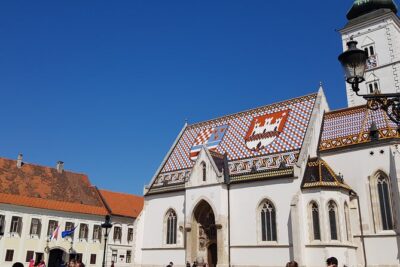
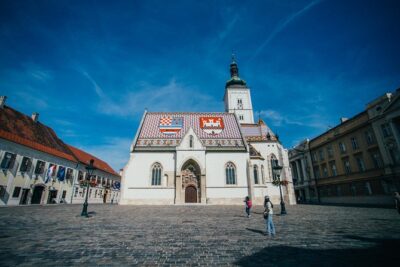
More walks through the Upper Town, St Mark's roof and the Dolac stalls below.


Price and what you actually get for $73.20
At $73.20 per person for roughly three hours, the value is mostly in the guide time plus the included transport piece. You’re paying for a licensed local guide, all fees and taxes, and the funicular ticket.
The rest of the planned sights are listed as free-entry at the time you visit, which matters because it reduces surprise add-ons. You also get a mobile ticket, and the group size cap means you’re more likely to get real back-and-forth instead of just listening while crowds stream past.
If you’re the kind of traveler who wants a quick orientation day, this price can feel fair fast. If you prefer slow, do-it-yourself wandering, you might find the schedule a bit tight.
Meeting at 10:00 and getting picked up from your hotel or apartment
The tour starts at 10:00 am. If you want pickup, you arrange it by sending your address, and the pickup is offered from all city hotels or apartments.
This is a big help if you’re staying somewhere a little outside the central core or if you’d rather not guess where to meet. It also makes it easier to plan the rest of your day, because you don’t need to build extra buffer time for transit to the starting point.
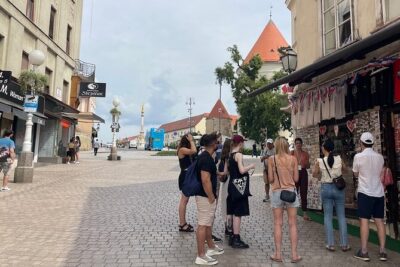
More ways to take in the city itself.

Cathedral of Zagreb: a landmark with a tough story
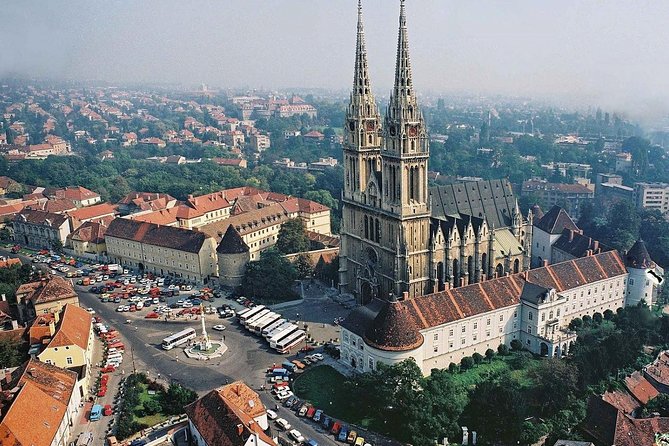
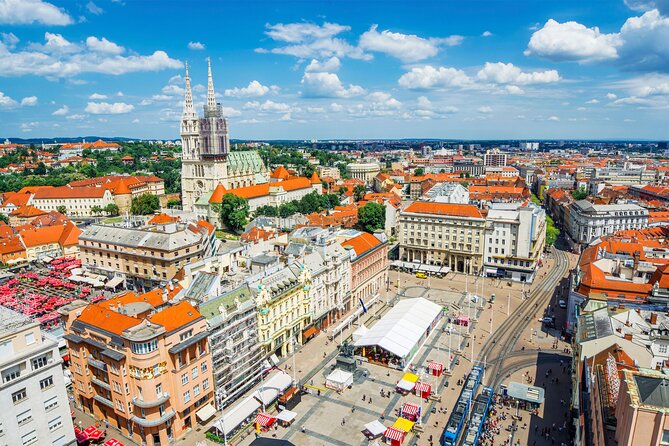
Your first stop is the Cathedral of Zagreb, officially the Cathedral of the Assumption of the Blessed Virgin Mary. You’ll spend about 10 minutes here, and the admission ticket is free.
The guide’s job at this stop is to give the building context: where the cathedral’s origins come from, the difficulties it has faced over time, and what renovation looks like today. That kind of explanation changes how you see the facade and interior details, because you start noticing features as evidence of long-term survival, not just decoration.
Practical tip: even if you only get 10 minutes, stand where the guide tells you to. In landmark buildings, the angle matters for understanding what you’re looking at.
Bar Street: watch the city’s everyday pulse
Between major sights, you’ll hit a stretch people often think of as the bar street. The plan here is simple: walk it, notice the crowd flow, and get a feel for how Lower Town social life shows up in the streets.
This stop can be short, but it’s useful. Zagreb isn’t only squares and churches; it’s also where people gather in the evening and talk over drinks. Seeing that street energy early helps you understand why later stops feel the way they do.
If you’re sensitive to crowds, wear comfortable walking shoes. Even without going into details, you should expect there to be plenty of people moving through.
St. Mark’s Square and Church: the view, the symbolism, the pace
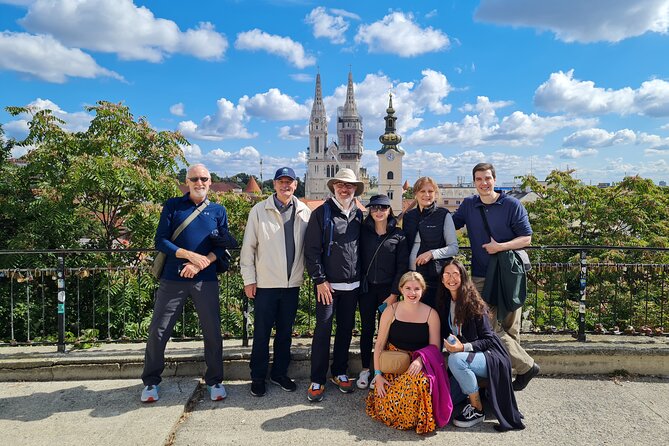
Next up is St. Mark’s Square and Saint Mark’s Church. You’ll have around 10 minutes, and admission is listed as free.
This is one of those places where photos are easy, but explanation makes it better. The guide helps connect what you’re seeing to Zagreb’s identity, so the square doesn’t feel like a random stop between bigger attractions.
A good moment to use here: look around, then ask your guide what you might be missing. With a group capped at 15, it’s realistic to get a direct answer rather than a vague overview.
Gric cannon: a quick stop that adds local texture
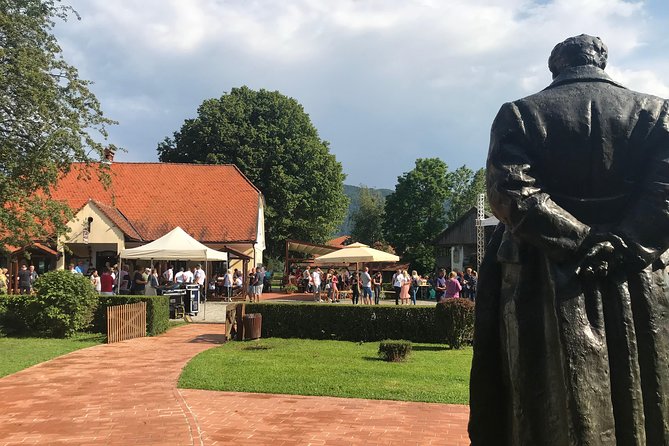
You’ll also make a stop at the Gric cannon. This is a shorter, more specific point on the route, and the goal is to add local texture to the big-picture landmarks.
Even when you only spend a few minutes, a stop like this helps break up the sightseeing rhythm. It’s the difference between ticking off famous names and actually feeling like you’re walking through a lived-in place.
Funicular Railway to Gradec: the classic ride, and it’s included
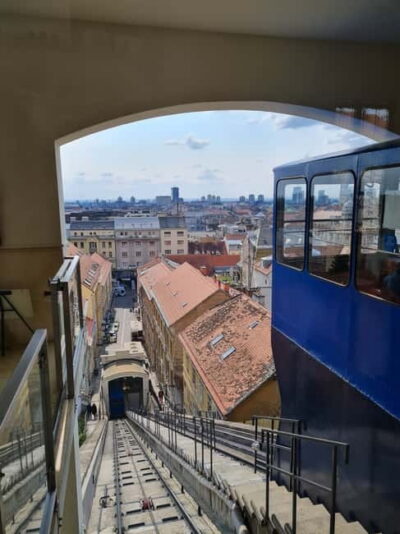
One of the best parts of this tour is the Funicular Railway ride. The plan is about 10 minutes, and the funicular ticket is included.
This is the oldest public transportation in the city, and the route carries you up into Gradec. The point isn’t only transit; it’s the shift in perspective. From the lower streets to the Upper Town feel, you get that sense of arriving rather than just continuing to walk.
Practical advice: keep your phone ready for the change in views. Even a short ride can make the next stops click visually, because you’ll be approaching them from a new angle.
Ban Josip Jelacic Square to the Stone Gate: from center stage to Upper Town edge
Back on foot, the tour goes to Ban Josip Jelacic Square, Zagreb’s central square. You’ll spend about 10 minutes, with free admission noted for the stop.
This kind of central-square time is about orientation. You get your bearings, learn what the guide wants you to notice, and then you transition upward toward the Upper Town structure.
Then you’ll reach the Stone Gate. This preserved gate is the only preserved gate at Upper Town, and the stop is about 5 minutes with free admission.
In other cities, gates can feel like decorative leftovers. Here, because it’s specifically described as preserved and singular, it reads more clearly as a surviving boundary marker. Even in a short time window, it helps you understand how Gradec was shaped around movement and entry.
Dolac Market: the belly of Zagreb
Your final stop is Dolac Market, often referred to as the belly of Zagreb. You’ll have about 10 minutes, and admission is listed as free.
Markets are one of the fastest ways to understand daily life. Even if you’re not shopping, you can watch how people move, how stalls are arranged, and how the market sits inside the city’s rhythm.
Use this time smartly: look around first, then pick one question for your guide. Ask what locals tend to buy here or what makes the market important for Zagreb. With a small group, you can actually get a helpful answer instead of a generic script.
Small-group attention, and why guides like Zrinka and Diana matter
The tour caps at a maximum of 15 people, and it’s described as private in the sense that only your group participates. That mix matters because it keeps your questions from getting lost.
The best part is how the guide handles curiosity. In the experience of people who took the tour with guides such as Zrinka and Diana, the common thread is that the guide didn’t just talk. They answered multiple questions and helped the city feel more real, not like a list of monuments.
If you like tours where you can steer the conversation a bit, this size is a good match. If you want a silent, self-paced walk with only a map, you may find the guidance a little too present.
What the itinerary rhythm teaches you about Zagreb
There’s a pattern to the sequence: landmark (Cathedral) → street life (bar street) → symbolic center (St. Mark’s) → classic transit to the heights (funicular) → central square and boundary markers (Jelacic Square, Stone Gate) → everyday city pulse (Dolac Market).
That rhythm is useful because it builds a story you can carry. You start seeing Zagreb as layered: religious and civic power, then daily social life, then the geography of access to Upper Town, then the market core.
Even if some stops are brief, the order helps your brain connect dots. You’re less likely to return home with disconnected photos and more likely to remember what each area felt like.
Who this Zagreb walking tour suits best
I think this fits best if you:
- Want a high-efficiency orientation day without sacrificing context
- Like walking tours but still want stops explained by a local
- Are comfortable with light walking over a few different city zones
- Appreciate small groups and question time
It’s less ideal if you hate crowds at popular street spots, or if you prefer to spend long stretches in one place. Because stops are short, this is not the choice if you want to linger slowly at every attraction.
Also, if you’re hoping for a deep architectural deep-dive at every stop, you’ll get real explanations, but the time is shared across multiple stops.
Should you book this Zagreb City Walking Tour?
Book it if you want a smooth introduction to Zagreb with a professional guide, a funicular ride you don’t have to plan, and a short, manageable route that covers both Lower Town and Gradec. The small-group cap and the quality emphasis from guides like Zrinka and Diana are exactly what you want on a first visit.
Skip it if you already know Zagreb well and only need a ride or two, or if you want long, slow museum-style pacing. This tour is about getting your bearings and understanding the city’s layout fast, and it does that job well.
FAQ
What is the duration of the Zagreb city walking tour?
The tour lasts about 3 hours.
What time does the tour start?
It starts at 10:00 am.
Is pickup available?
Yes. Pickup is offered on request from all city hotels or apartments if you send your address.
How large is the group?
The group is small, with a maximum of 15 people.
What language is the tour offered in?
The tour is offered in English.
Is the funicular ride included?
Yes. The funicular ticket is included in the tour.
Are admission tickets included for the stops?
Admission is listed as free for stops such as the Cathedral and St. Mark’s area, and the funicular ticket is included.
Is this a private tour?
It’s described as private, meaning only your group participates.
What is the cancellation policy?
You can cancel for free up to 24 hours in advance for a full refund. If you cancel less than 24 hours before the start time, the amount paid is not refunded.
More Tours in Zagreb



More Tour Reviews in Zagreb

More Upper & Old Town Walks
Not quite it? More Zagreb tours and day trips
- Jump into Zagreb: Walking Tour with local guide
★ 4.8 · 3 reviews - Zagreb : Highlights Walking Tour With A Guide
★ 4.7 · 3 reviews - Zagreb Food Tour: Bite into Traditional Dishes and Flavors
★ 5.0 · 3 reviews - Zagreb to Split private transfer with National park Plitvice lakes guided tour
★ 5.0 · 3 reviews - Plitvice Lakes and Rastoke Private Day Tour from Zagreb
★ 5.0 · 3 reviews - Plitvice Lakes Private Guided Tour from Zagreb with Transfer to Split
★ 5.0 · 3 reviews - Private transfer from Zagreb to Zadar with Plitvice Lakes private tour
★ 5.0 · 3 reviews - Plitvice Lakes Hidden Gems from Zagreb
★ 5.0 · 3 reviews
Zagreb Old & Upper Town Walking Tours, compared.
 ★ 5.0Best of Zagreb with the WW2 TunnelsFrom $23973 reviews
 ★ 4.9Small Group Walking Tour City Center and WW2 TunnelsFrom $23895 reviews
 ★ 4.9City and WWII Tunnels Walking TourFrom $23845 reviews
 ★ 5.0Walking tour of ZagrebFrom $24383 reviews
 ★ 5.0Zagreb Small Group Guided Walking Tour with WW2 TunnelsFrom $24380 reviews
 ★ 5.0Old Zagreb Private TourFrom $90350 reviews
 ★ 5.0Zagreb Highlights Bike TourFrom $49208 reviews
 ★ 5.0Restaurants, Food & Old Town Walking TourFrom $107191 reviews
Browse the lists this tour appears in